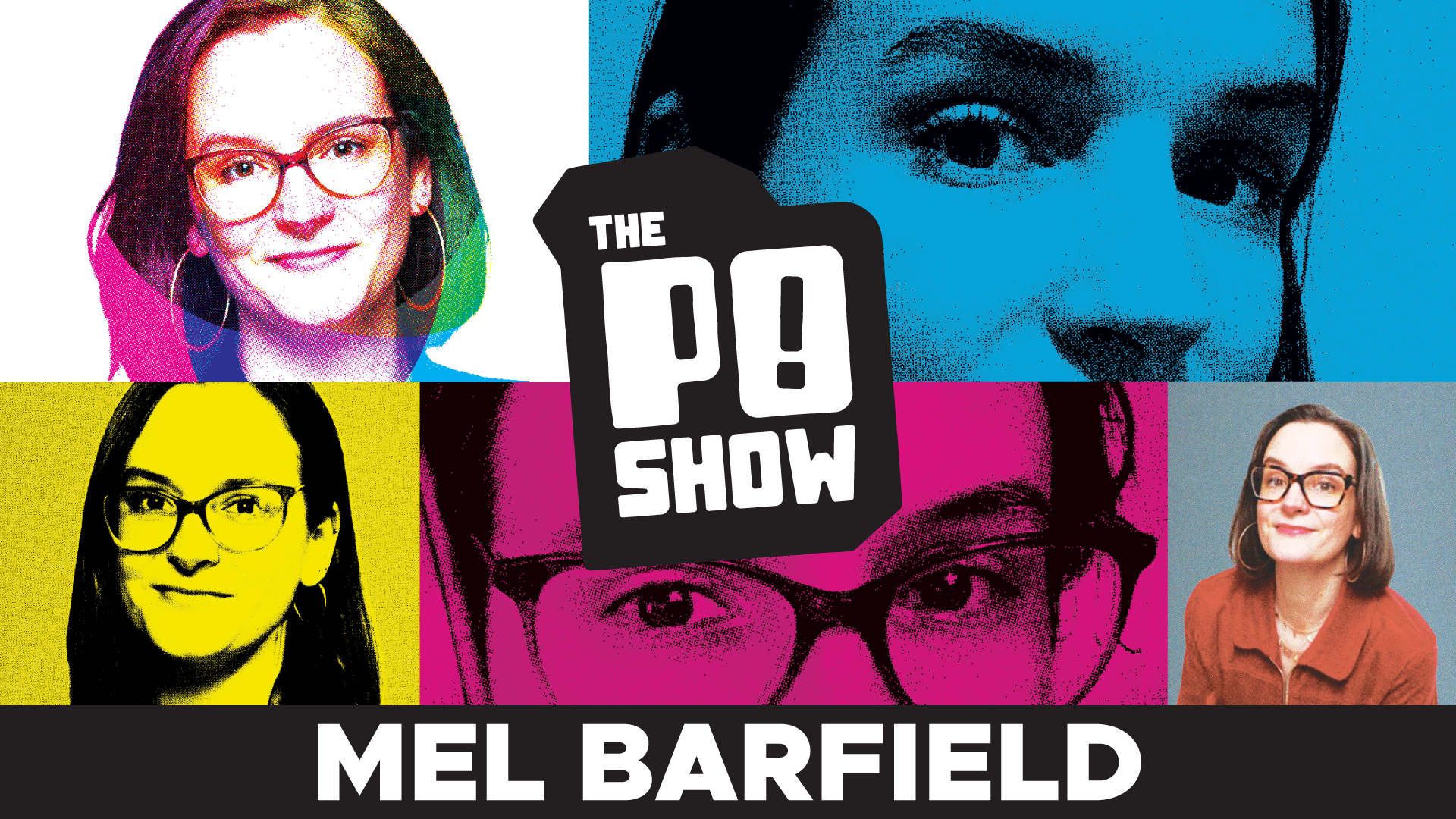
Mel Barfield
Brand Voice Lead & Managing Partner, Copy or Die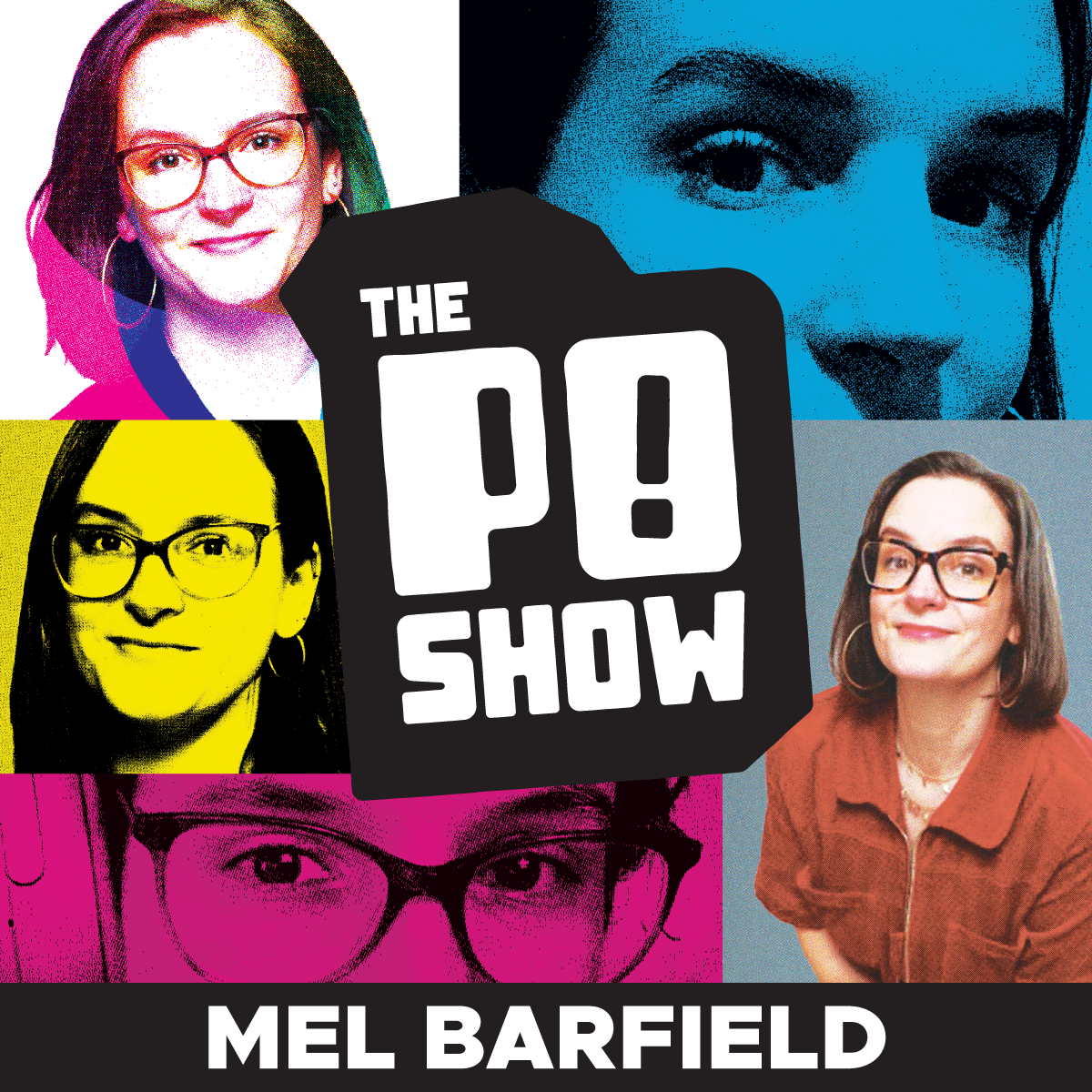
Episode #1 · September 9, 2026Shorten the Gap
Mel Barfield turned "just a career advisor with a knack for words" into a Women in Marketing Award, a copywriting agency, and a LinkedIn following that recognizes her in the wild. Her whole playbook fits in three words, and it's the reason people hire her before they've even met her.
Worth a look
Some of the goodies mentioned, just one click away.Mel on Instagram — @allcopymel
Don’t be the best. Be their favorite.” Talk by Jay Acunzo. for The Marketing Meetup.
2 Ways to Listen, Wherever You Already Hit Play
The Brand BuilderThe full story — career advisor to career-in-prison-teaching-teenagers-to-brush-their-teeth to copywriting powerhouse. Overthinking as a superpower, nepotism as a strategy, and why "the clients can see you."
PO Notes Short on time? The nuggets: don't be the best, be the favorite. Nepotism is your friend. And the whole theory of shortening the gap, explained in under 15 minutes.
Show Transcript
Guest Introduction Phillip: Today's guest spent years as a career advisor, elbow deep in the dark arts of career theory, guiding others into their dream jobs while secretly longing for her own, before discovering her own black magic talent in the world of copywriting. She exploded onto the social media scene in 2021 after launching her freelance writing career and hasn't looked back. During that time, she won a Women in Marketing Award for Tonal Voice, became a partner of the no-fluff-but-funny and AI-free copywriting agency Copy or Die, written columns for Freelancer magazine, graciously accepted loads of fans and followers like the actor Ryan Reynolds, and once influenced a LinkedIn friend into scoring "Pancake Riot," an early-aughts-inspired rock song about the true story of an argument with a Russian guy while on holiday over pancakes. Aside from being a talented copywriter, she's also a wonderful speaker and host of Indie Business Club, a podcast for independent creatives, founders, and business owners. Off the clock, she's defending 1983's Superman III as the greatest Superman movie ever made — which I agree with — raising two daughters along with her husband, and trying to convince anyone who'll listen that nepotism isn't something to fight, it's something to work in your favor. Mel Barfield, welcome to The PO Show.
Mel: That was an incredible introduction. Thank you so much. And I'm very glad that we're in agreement about the best Superman film, 'cause there have been many, too many, some would say. It's me, I'm some.
The Appetizers Phillip: We watched it literally three days before you and I chatted last week. My wife said it was awful, and I said, no, it's not awful — it's 1983. You can't make that movie anymore. Everything now is about how beautiful someone is, or how silly, or how slapstick. The best comedies used to just go under the radar and we'd find out about them years later.
Mel: I want to give an honorable mention to Rocky IV, because I think a lot of this comes down to what you had on VHS growing up — whatever you were forced to watch because it was the only thing available. It's familiarity. There's a branding comparison in there somewhere, but let's not.
Phillip: It might be one reason Mr. Mom is one of my favorites. Early '80s — a stay-at-home dad who's lost his career ends up in his wife's shoes, and she goes back to work as an advertising executive. There's a scene where she walks into a room full of agency people and asks, 'When's the last time you actually talked to a housewife?' — and they laugh at her. That's the reason I bring it up: we still talk about this exact problem on LinkedIn every day.
Mel: I've never seen it — sell it to me. Okay, I need to watch this.
Phillip: So — as we mentioned, you're the host of Indie Business Club, now entering its third year. You've interviewed a ton of smart people, in and out of advertising. Is there anyone you haven't interviewed yet who'd be a dream guest?
Mel: I'm lucky in that I have decent access to a lot of my dream guests already — I've got some yeses banked. The real problem right now is time, actually recording and putting episodes out. But my true dream guest is everyone's dream uncle: Rory Sutherland. He's not a freelancer, but he could give such a good insight from the agency side — what agencies actually want to see in a freelancer. My audience is mostly freelancers and founders, so that would be genuinely useful, and honestly I just want to talk to him because he's cool. I know enough people who know him that it's not a completely insurmountable challenge. Rory, I'm coming for you.
Phillip: That's happening. He's basically his own brand at this point — what he says yes to and where he spends his time really matters.
Mel: Yeah — though I don't think my little podcast is his top priority. But we'll shoot high.
Phillip: If you were an early-'00s pop or alt-rock band, who would you be?
Mel: I'm not going to overthink this — the Pigeon Detectives, mostly because it's a great name. I first heard them at a festival around 2007; someone handed me a burned CD of theirs and I listened to it constantly. It's that guitar-based indie sound. Who would you be, Philip?
Phillip: Nice reversal. I'm going to overthink it and say the Kooks.
Mel: I knew that's what you'd say — that's why I didn't pick it, I figured you'd want it.
Phillip: What are three of your favorite brands? How did you find out about them, and when's the last time you bought any of them?
Mel: I'll name two clients, since why not. First is The Marketing Meetup — they run in-person and virtual events for marketers. I wasn't their client when I first got to know them; I've worked with them on retainer for about a year now. I love them because their whole thing is kindness, generosity, learning, and community, and it's not a purpose statement written on a napkin — it grew organically, and you can tell. Second is a small cider company — hard cider, not what you'd call apple cider over there — called Big Nose and Beardy, named after the two men who started it, one with a big nose, one with a beard. I write their emails and they let me have fun with tone of voice. They make cider the traditional way, pressing apples and letting the natural yeast on the skins ferment it. It started because they were bored — some dads from the school run decided to have a go — and ten years later they're the last one standing with an actual business. I love brands with a bit of story, especially when they let me play with the words. Third isn't a client yet: Marks & Spencer. They're an institution here — clothing, food, homewares. It's a rite of passage for teenage girls to get their first bra fitting there. I had my first job there too, on the bras and menswear, sorting endless racks of nearly-identical brown chinos. I later applied to their graduate scheme a bit late, at 26 — didn't get in, but made the last 30 out of 14,000 applicants, so I'll take that as a win. They've had the same tagline for years: 'This is not just a [product], this is M&S [product]' — you can drop any item in and it still works. It's iconic, consistent, and has built an enormous amount of trust, even if some people think the quality isn't quite what it once was.
Phillip: What a personal, intimate category that is for women — bra shopping — and how few brands lean into that honestly instead of playing it safe.
Mel: There's a reason it's such a universal truth that women can't wait to take their bra off when they get home. Any brand that leans into that and plays on it is going to do well. That's the thing everyone in marketing is chasing — the universal truth.
The Meat The Long Way Round to Copywriting
Phillip: LinkedIn people know you as a tone-of-voice and copywriting powerhouse, but you didn't start there. You trained as a career advisor, worked with young people for years, then ran social, newsletters, and web copy for a local council. Walk us through that.
Mel: The irony of being a careers advisor is I sort of fell into it without knowing what I wanted to do myself, so I ended up telling other people what to do instead. I worked with young people, trained others to become advisors — I always want to be the best I can be at whatever I'm doing, so I kept upskilling. Then my husband's job put us at a fork in the road: take redundancy and potentially travel for a year, or relocate. We moved, and because I was pregnant at the time, I didn't have a job to go back to. I briefly became a childminder and hated it — I wasn't using my brain enough. Then I saw a small, part-time reception job at the town council. Something about it kept winking at me, so I took it, worked my way up, ended up specializing in events and community engagement, and then saw a course on copywriting. That was it — game over for any other career. It took about a year between finishing that course and actually leaving, mostly because I gave a far longer notice period than I needed to. I'm too nice, Philip.
Phillip: I love hearing about those less glamorous early jobs — you learn so much more there than people give them credit for. You've said you don't regret not finding copywriting sooner, because those years gave you texture you wouldn't have had launching straight into an agency at twenty. What did those years teach you that a copywriting course never could?
Mel: As a careers advisor I met people from every walk of life — kids in private school, kids in prison. I worked at Top Shop and Marks & Spencer before that, always in customer-facing roles. In the prison work especially, I saw a side of life most people are protected from — I remember a fourteen-year-old boy who had to be taught how to brush his teeth by a guard. I'm too much of an empath to do that work forever; I'd come home still carrying the weight of it. But it gave me real perspective on what people actually want versus what they say they want — those are often two different things. I also have a psychology degree, and between that and the interview-based training to become an advisor, I learned so much about talking to people and finding the message beneath the message. That's made me far better at what I do now than a course alone ever could have.
The Freelance Leap Phillip: What was the final straw that pushed you to go freelance?
Mel: It was a thousand tiny straws, including being forced back to the office after COVID — I felt like I'd lost the ability to think in a straight line. The bigger one: my youngest daughter was hospitalized with pneumonia for a week, the day after her first birthday. My husband's employer told him to take all the time he needed. My employer made me take half of it as holiday. I know I'm speaking to an American here, so the bar is different — but that was completely within their gift to waive, and they didn't. That's when the rot really set in. Around the same time I was seeing people on Twitter living a genuinely good freelance life, which made it feel possible for me. I'd already done one copywriting course and loved it so much I immediately signed up for a second one, on my own dime. Eventually I told my husband I couldn't face work the next day, and he just said, quit. So I did — after, again, a ridiculously generous notice period. Best decision I've ever made. I don't think I could be employed again now. I'm unemployable, ungovernable.
Building a Voice, and a Following
Phillip: When we first met, it was through the freelance and advertising community on Twitter — never X. What did that community give you that you weren't getting anywhere else?
Mel: The biggest thing was seeing other people doing something I wanted to do, which made it feel possible. My daughter has a hearing aid, and she lights up whenever she sees someone with a hearing aid on TV — that's representation doing exactly what it's supposed to do: if you see someone like you doing something, it makes you believe you could do it too. I don't know anyone in real life who freelances the way I do, so that community was where I learned everything. There's a woman named Ellen — her business is Content by the Sea — who never gives out her phone number, and that alone was a revelation to me; it hadn't occurred to me you could run a business that way. All my early micro-decisions were based on watching what other people were already doing. Seeing other people's portfolios also gave me the confidence that I was good enough to do this for a living. That's what Twitter gave me before I jumped to LinkedIn, same as you did.
Phillip: You do such a good job of purposefully putting yourself out there. Where does that instinct come from — not just carrying the torch, but throwing the Molotov cocktail and telling everyone what they need to hear?
Mel: Women are still talking about the same issues over and over because it's so deeply rooted in culture — you don't have to go back far in history to a time when women couldn't have their own checkbook. There's also a much bigger real-world risk for women who put themselves out there online than there is for men. So I like to nag people, because I know so many brilliant people who don't talk about their work — they're the best-kept secret instead of the well-known one. I encourage people to apply for awards, too: I won the Women in Marketing Award, and I can directly trace work back to that win. Copy or Die also brought on a writer, Gemma Strang, who I met properly at that same award event — her portfolio is one of the most creative I've seen. None of that happens if I hadn't put myself forward. And then there was the moment Vicky Ross retweeted my website saying she liked my work — I nearly threw my phone across the room. All of it comes from putting yourself out there, and I think more people would see that same kind of knock-on effect if they had the courage to do it.
Phillip: You mentioned an audiobook someone made of your daughter's story, and the song 'Pancake Riot' — is that how some of these friendships started?
Mel: Both came from the same friend, Ant Henderson, who's now my podcast producer. My daughter entered a short story competition, didn't make the first round, and I posted the story on LinkedIn with her permission. Ant secretly had a voiceover artist, Sarah Starling, narrate it with full soundscaping — it was set in space, so he added spaceship noises and turned it into this immersive little audiobook, just to be nice. 'Pancake Riot' came from a story I posted about getting into an altercation with someone on holiday — my daughter was proud of me for standing up to a bully — and a guy named Dan Cooper turned it into an actual song. Neither of those things happened because Ant or Dan were angling for anything. They were just having fun, and people respond to seeing others have fun and show off their skill. That's exactly why, when it came time to pick a producer for the podcast, there was only one person I wanted.
Copy or Die Phillip: How did you and Dave Harland formally unite as Copy or Die's 'Wonder Twins'?
Mel: I met Dave in real life about four years ago and fangirled a little — he was so humble about it that I quickly stopped being a loser and just got to know him as a friend. He originally set up Copy or Die with Ben McKinney, who also co-founded my podcast with me. I was one of the freelance writers they'd bring in on briefs, then joined as senior copywriter about a year ago. When Ben left in late 2025, I stepped into more of the operational side with Dave, and it quickly became a proper partnership. Dave has exceptionally high standards — that's part of why he picked me — and we're aligned on the idea that overthinking is actually a strength for a copywriter. If you're not interrogating every word and looking at it from every angle, you're probably doing your client a disservice.
Phillip: You made your own luck there by putting yourself out there in the first place.
Mel: Definitely. I remember the very first post of mine Dave commented on — a silly, off-the-cuff story about getting bitten on the ear by a dog named Biscuit when I was little. I didn't overthink that post at all, and that's exactly the point: overthink the client work, edit it, rewrite it, look at it from every angle — but when you're building your own personal brand, don't overthink it. Be as raw as you can. The more I overthink and edit something like a LinkedIn post, the more it starts to sound like AI.
Phillip: What's next for Copy or Die?
Mel: We'd like more retainer clients — we love getting to know people long-term, and both sides see the benefit of that. We're also looking at productizing some lower-ticket offers, because a lot of people come to us wanting to work with us but can't afford the full package. We want something for them too, without sounding too much like gurus about it.
The Mel-osophy Phillip: 'Don't be the best, be the favorite.' Where does that come from, and why has it stuck?
Mel: Credit to Jay Acunzo, a speaker and speaker coach — I just love it because it sums up my entire marketing plan in one sentence. I still try to be the best, but I've seen 'favorite' win out again and again in my career. If a brand is choosing between two equally good writers, they'll pick the one they get on with better. People pick based on personality — that's just a fact. So you should absolutely work on being great at what you do, but there's also a lot to be said for being easy to work with — not sending a passive-aggressive invoice over a payment that's ten minutes late. I have boundaries, and I'm firm, but I'm not a jerk about it. It's attracted the right clients to me. I've said before that I don't give out my phone number, and someone once commented that they wouldn't work with me because of it — and honestly, I wouldn't want to work with him either. It's as much about repelling the wrong people as attracting the right ones.
Phillip: Can you give an example of being proactive with a client — not waiting to be asked, but seeing the opportunity and taking it to them?
Mel: I had brutal feedback early in my career — my boss's boss once asked, 'Where's Melanie's initiative?' — and it's stuck with me ever since, in a good way. Now I try to anticipate what long-term retainer clients need before they ask, because you get to know their rhythms. At Copy or Die, if we can see a client's going to need something small and out of scope, we'll sometimes just fold it in rather than charge separately — those little freebies grease the wheels and build the relationship. I'm not saying work for free constantly, but if you can anticipate a need or know something won't take long, being generous pays off. That relies on trust you've already built, and on not being a doormat about it.
Phillip: There's real value in the retainer relationship for exactly that reason — someone who's close enough to the business to look for opportunities instead of just logging billable minutes.
Mel: Exactly — if you put someone in a position where they have to itemize every minute, you're not going to get their best thinking. Sometimes the fifteen minutes with your feet on the desk staring at the ceiling is where the answer actually shows up. I'll always push, gently, for a bit more runway on a deadline if I can get it — if something's due Friday, I'll ask whether Monday morning actually makes a difference, because a fresh Monday look after a weekend away from it always surfaces things I'd have missed. We're there to be consultants, not an extension of the internal team, and pushing back gently on a brief is part of doing a better job for the client, not a lesser one.
Phillip: 'Nepotism is your friend' — as an American I recoil at that phrase a little, but it's a sharp hook. Unpack it.
Mel: Nepotism has a bad reputation for good reason — like giving friends government contracts they don't deserve. But there's good nepotism and bad nepotism. If you've got two people up for a job, one you get along with and one who's slightly better at the task but a pain to work with, you're going to pick the person you like — that's just instinct. Understood that way, it's actually a good incentive to put yourself out there authentically, because you're building the kind of rapport that becomes 'nepotism' later. There's a book, Key Person of Influence by Daniel Priestley, where I read it and realized I'd accidentally done most of what it recommends — getting to know the most successful people in your industry, learning from people ahead of you, getting your voice out there. There's a Bob Berg line I use on a slide constantly: all things being equal, people do business with and refer business to those they know, like, and trust. That's why 'know, like, trust' gets hammered into us as marketers — because it's true.
Phillip: You've talked about a 'portfolio career' — doing several different things rather than one job. What does that look like week to week for you, especially as a parent?
Mel: A portfolio career makes sense given how fast technology, AI included, can disrupt an entire industry — you don't want all your eggs in one basket. Mine started years ago as a careers advisor, when a colleague's role got split into two part-time positions and I ended up negotiating a separate day of freelance work on the side using old contacts. Now it's the podcast, speaking engagements, my role at Copy or Die, some of my own freelance clients, and writing for Freelancer magazine. None of it ties me to a single block of the week, which is a blessing and a curse — I love the flexibility, but it also means nothing forces me to focus. I'd encourage anyone in a slightly vulnerable industry to look at what's adjacent to what they already do, and to specialize in the parts AI is least likely to replace.
Phillip: How do you stay organized across all of that?
Mel: I write a daily to-do list on a reMarkable tablet, which keeps all my notes with each client in one place — there's something about the physical act of writing that makes things stick for me. I need multiple alarms for everything, including picking up my kids. I've tried time-blocking, but honestly my brain works best when I let it drift and come back to the same thing later. Most of my clients don't need an eight-hour block from me — two hours here, two hours there works fine. No real productivity hacks, I'm afraid — if you find one, let me know.
Let's Go to the Seaside Phillip: You've already spoken at a few conferences this year. What else do you have coming in 2026?
Mel: I'm going to see Rory Sutherland speak at Nudgestock, which I'm genuinely excited about. And I can exclusively tell you — this might not be exclusive by the time this airs — that I'm going to be MC'ing CopyCon this November, the copywriting conference, virtually, for the full two days. A while back I posted on Twitter that I wanted to speak at CopyCon one day, and I did, in 2024. Going from wanting to speak there to hosting the whole thing feels like a nice bit of a full circle.
Phillip: The podcast must help with that too — showing you can handle a crowd and steer a conversation.
Mel: Earlier this year I was on a CopyCon panel, and the day before the event the organizer asked, last-minute, if I could host a case study discussion with Giles from Gasp, who we both know. I said yes immediately. I think that kind of 'get stuck in' attitude is exactly why I got asked to MC the whole thing later — he'd already seen me jump into something with almost no prep.
Phillip: Any conferences you'd recommend to copywriters listening?
Mel: Come to CopyCon in November — I'm MC'ing it. There aren't many copywriting-specific events, but anywhere marketers and creative people gather is worth being at. Go in trying to make friends, not business connections — the business side follows naturally. When I meet someone new, I try to talk to them as if we're already friends. It skips a step and makes the whole thing feel more natural for both of you.
Questions from Industry Friends Phillip: First up, Anthony Henderson: you talk a lot about 'shortening the gap' between you and your audience. Can you tell us a memorable time you did that, and what happened?
Mel: I notice it most at conferences, when someone recognizes me in person and says, 'You're Mel from LinkedIn, aren't you?' — and I have no idea who they are, because either they don't post themselves or I just don't recognize them without their profile picture glasses. There's a trick: say 'nice to see you' instead of 'nice to meet you,' so if you have met before, you're covered. Video especially does this — people already know how your voice sounds, how your face moves, your mannerisms, before they meet you. It shortens the gap that would otherwise exist. People who only ever post text on LinkedIn are much harder to place in real life, because none of that groundwork has happened. It's the same reason I talk a lot about liking cheese online — little details become shortcuts and conversation starters. It's bringing people closer to you before they've actually spoken to you.
Phillip: It's a great metaphor for brands, too — closing the gap before someone's even standing in front of the product.
Mel: Exactly, and that's where tone of voice matters so much — it's drip-feeding what you know about a brand into people's heads. If a brand suddenly speaks in a completely different way than usual, it breaks trust immediately, because it doesn't sound like them anymore. The best compliment I get is people telling me I'm exactly how they imagined from my content — it shows I'm consistent.
Phillip: Second question, from Vicky Ross: when you meet someone who doesn't know what a copywriter is, how do you explain what you do?
Mel: The simplest version: we use words to persuade, and we should use that power responsibly. The better, longer version is that the best copywriting backs up what people already know to be true and gives them a push — it's not about convincing someone to do something against their own interest, it's about finding the right people and communicating why something will actually benefit their lives.
Phillip: Last one, from Dave Harland: if you created the Philip Oakley brand voice right now, what would his three subtones be?
Mel: Suave — classy, confident, elegantly smooth in social situations. Considered — you don't blurt things out, every word earns its place, whether you're speaking or writing. And reassuring — there's something steady and calm about the way you talk, never reactive, even under pressure.
Phillip: That's a great excuse to ask how those subtones actually get built into a brand voice guide in practice.
Mel: At Copy or Die it starts with a paper-based discovery brief and call — what are the business goals for the next five years, and how does tone of voice actually connect to them. We do competitor analysis to see how other brands in the space talk. Ideally we run an in-person, full-day workshop — two days in my ideal world — where we dig into examples the client likes and dislikes, sometimes using shortcuts like 'if your brand were a Disney character, which one would it be,' or referencing how Alien was originally pitched as 'Jaws in space' to get everyone aligned quickly. We pin down specific word choices — the difference between 'funny' and 'humorous,' and where on that scale a brand actually sits. We write the guide to about 80–90% complete, then run an implementation session where the team creates real examples live, which go straight into the final document — people respect and follow a guide far more when they've had a hand in building it. Subtones are the parts of a voice that get dialed up or down by context: one element ramped up for social media, dialed back for customer service when someone's upset, and so on. A tone of voice guide should never just be a document that ends up in a drawer.
Closing Question Phillip: If you could communicate one thing to every marketing channel in every city around the world simultaneously, what would that message be?
Mel: This will sound narcissistic, but honestly — my Instagram handle. I'd be inundated with followers overnight, and then I could use that platform to say whatever I actually wanted to say. A generic message like 'be kind' wouldn't move anyone; the people who already agree will nod, and the people who don't will just get angry. But if you've got the world's attention for a moment, the smart thing to do is capture it first and decide what to do with it after. Purpose only works once you've actually got attention — purpose without an audience doesn't go anywhere.
Sign Off Phillip: How can listeners find out more about you, your work, and Copy or Die?
Mel: I'm chronically on LinkedIn as Melanie Barfield — like Garfield the cat, but with a B. I'm @allcopymel on Instagram. And we're at copyordie.co.uk, where there's a briefing form if you want to get us in to work.
Phillip: We'll make sure all of those end up in the show notes. Mel, thank you for spending so much time with me — it's been an absolute pleasure.
Mel: I've had a lovely time. Thanks for having me.
Keep It Coming