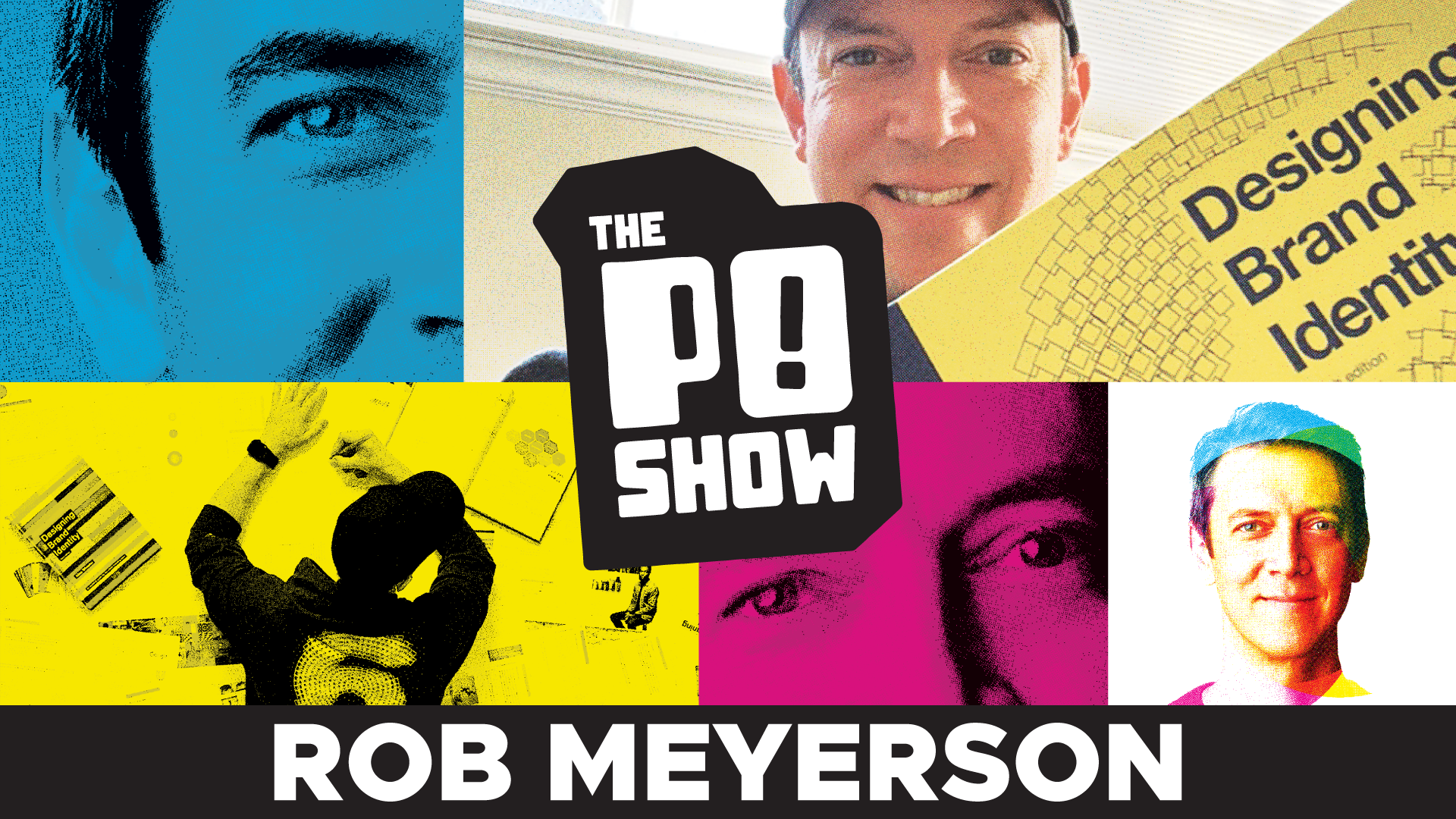
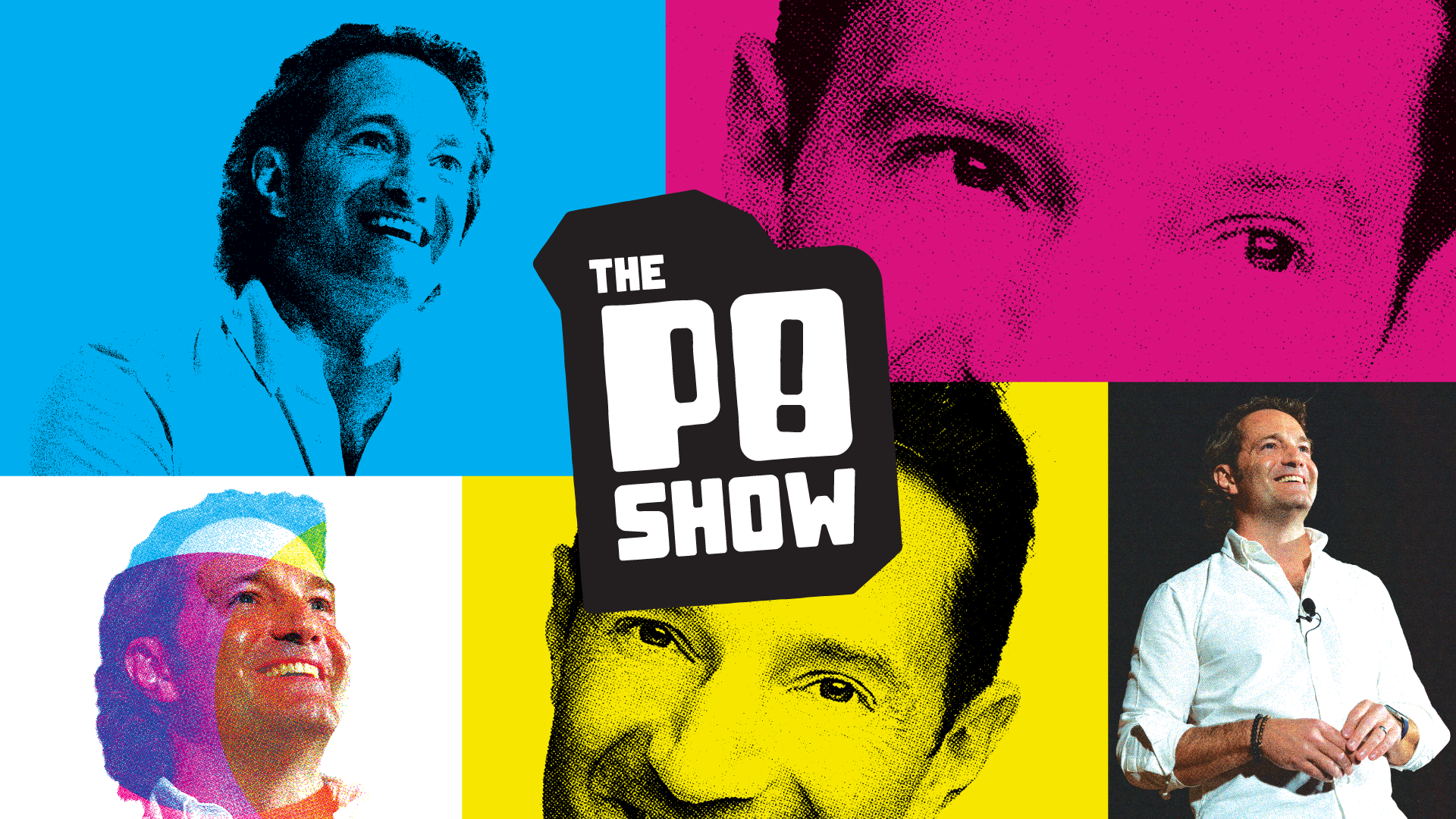
Rob Meyerson
Founder, Heirloom Brand Consultancy · Author of Brand Naming and co-author of Designing Brand Identity, 6th Edition
Episode #2 · September 9, 2026Brand Naming is a Risk Mitigation Strategy
Rob Meyerson wrote the book on brand naming, literally, and he's here to remind us that picking the perfect name has a lot less to do with inspiration than it does with knowing exactly who might sue you for it.
Rob teaches us that what looks like a small, obvious task (to pick a good name) is actually the tip of an enormous amount of unglamorous, disciplined work, and that work only gets learned by doing it and by people who were generous enough to teach you
Worth a look
Some of the goodies mentioned, just one click away.Books & References Mentioned in the Episode
Positioning, Al Ries & Jack Trout
Hello, My Name Is Awesome, Alexandra Watkins
How Brands Grow, Byron Sharp
Eat Your Greens, Wiemer Snijders
2 Ways to Listen, Wherever You Already Hit Play
The Brand BuilderThe full story — from an accidental gig answering emails at Interbrand to co-authoring one of the industry's defining books, Rob's path into naming winds through Shanghai, Singapore, a handful of generous mentors, and one unforgettable baton pass. This one's the full story.
The PO NotesShort on time? The nuggets: the kiki/bouba effect, the legal gray zone nobody warns you about, and Rob's honest verdict on whether AI can actually name your company. If you've only got fifteen minutes, start here.
Show Transcript
Intro Phillip Oakley: Today's guest is my buddy, Rob Meyerson, brand consultant, professional namer, agency founder, and one of the most prolific authors in the branding space. Rob's career has taken him from San Francisco to Shanghai and back, working with everyone from scrappy startups to heavyweights like Adobe, Salesforce, and Meta. He sharpened his naming and strategy chops at shops like Interbrand and Siegel & Gale, served as global head of brand architecture and naming at HP, and has authored several books, including my personal favorite, aptly titled Brand Naming, along with the accompanying Brand Naming Workbook and papers like the 4x4 Framework for Naming Systems and the Perennial Brand Names report. In 2024, Rob co-authored the sixth edition of the bestselling book Designing Brand Identity alongside the late Alina Wheeler, updating a true industry guide for the challenges of today's digital landscape. Rob operates Heirloom, an independent brand strategy and identity consultancy in San Francisco, and hosts the podcast How Brands Are Built, a deep dive into what branding professionals actually do and how they think. Welcome to The PO Show, Rob.
Rob Meyerson: Hey, I'm happy to be here. Thanks for having me.
Appetizers Phillip Oakley: Before we tuck into the meat of things, I have a few fun questions that should give the listeners a bit of flavor for your style and personality. Most people I talk to may not have podcasts, but you do, so I'm going to twist this up a little for you. What is your top wishlist guest for How Brands Are Built, and why do you want to interview them?
Rob Meyerson: Yeah, great question. I'll be honest, I feel like I've been very lucky with how brands are built. Those who have listened to the podcast will have noticed that it's slowed down considerably — I do hope to bring it back for more seasons and get on more of a schedule. But part of the reason it's slowed down is that I really got to talk to a lot of the people I wanted to talk to. It was so rewarding getting people on the show who were heroes of mine. I talked to David Aaker, I talked to Marty Neumeier more recently, I talked to Alina — that's actually one of the first times she and I really met. I got to talk to Laura Ries, so many people.
Speaking of Laura, one person I didn't get to talk to is her father and business partner, Al Ries, the famous co-author of Positioning, a book that really inspired our industry. I'd emailed with him a few times, and when I asked him to do the podcast, he wrote back and said his hearing was starting to fail him and he wasn't doing podcast interviews anymore. He suggested Laura instead. Sadly, he passed away a few years later. It would have been nice to chat with him — he was an early inspiration for me, like so many other branding professionals. I watched some of his videos on YouTube way back in the day, and it got me thinking about positioning differently, or thinking about it at all. So he's one I wish I'd been able to talk to.
Honestly, the nature of the podcast is that it's very in the weeds, and I think my favorite people to talk to are actually people you haven't heard of — people who are really doing the work and willing to get pragmatic about it. Just, how do you actually do this? I think the more experienced "guru" types sometimes speak in soundbites. They can be really inspirational, but when you ask them, "Yeah, but what do you actually click and open up to do that thing? How do you write that? How do you get those ideas?" — they either can't or won't get into that level. That's really what the podcast was for, to get to the brass tacks. So sometimes, yeah, it's just people who do the job.
Phillip Oakley: Yeah, I love that. There's lots of people accused of "fluff fluency" — that's a word that's come up a few times on LinkedIn — where they talk a good game, but then you get in a room and you can't pull it out of them. There was a book — it might have been Donny Deutsch's — that talked about sitting at your desk with your feet up, throwing a pencil at the ceiling tiles, waiting for ideas, because you've filled your head with so much stuff. And the first one, two, three ideas typically aren't the best — you want to push beyond those. That's always stuck with me. I don't throw anything at the ceiling, but I do bounce a ball every once in a while just to create space for the brain to work.
Rob Meyerson: There's an old ad man — I think his name is James Webb Young — who wrote a book decades ago called A Technique for Producing Ideas. It's just a five-step process, almost not worth buying the book because you can look up the steps online, but it was an early inspiration to me. It was that same idea — how do you actually do it? Just tell me exactly what happens instead of pretending it's some magic lightning bolt where you either are creative or you aren't. There is a process to all of this. That's what the naming book is about, and a lot of what the podcast is about.
Phillip Oakley: We'll make sure we get all the books we just talked about into the show notes. Second question — how would you describe yourself if you were a 90s rock song?
Rob Meyerson: You hit the right genre for me. The older I get, the more I realize your musical genre is just whatever you listened to from 14 to 22. It's hard to pick a song, but I'll go with Death Cab for Cutie — they're not really a 90s band, but they have a couple of songs I love. They're kind of overly sensitive and overly intellectual, which is probably me, if not my actual working style.
Phillip Oakley: I want you to know, while I was pulling questions together, I was listening to their top songs on Spotify to get in the mood, and I forgot how good these songs — and the lyrics — are. There's real thought behind it. Well done.
Rob Meyerson: I love it when you listen to a band and think, "Oh, they did this one too." That's a sign of a good band.
Phillip Oakley: In no particular order, what are three of your favorite brands, and how did you first learn about them?
Rob Meyerson: Well, I'm drinking one right now — Nespresso. I know coffee snobs might look down on it, but if I'm being honest about what I actually interact with every day and have a relationship with, Nespresso is up there. I've been ordering those pods for over a decade. It's not great for the environment, but coffee is a big part of my life and my happiness, and Nespresso delivers it for me.
Second — I'm drinking it out of this mug, a Hasami porcelain piece from Japan. I'm kind of a mug nerd. My wife hates it — every time we're in a store and there's a nice mug, I'm like, "Let's get this," and the cabinet's already overflowing. She's got me on a rule now: get rid of two every time I buy one. But this is close to a perfect mug — exquisitely done, and it heightens the experience. I discovered Nespresso through those George Clooney ads that aired overseas, and I actually worked on the Nespresso brand at Future Brand in Singapore — one iteration of the brand idea was basically "what if Louis Vuitton made coffee?" I was familiar with the brand before I became addicted to the product. Hasami I probably discovered at a coffee shop in San Francisco that used exclusively those mugs — they eventually had to stop, I think because people kept walking off with them, and they downgraded to something less precious. But I knew I had to own one.
Third — I'll go with Costco. Everybody loves Kirkland, their private label brand.
Phillip Oakley: Yeah, that's the one brand that's hit different categories across the board — probably what we have the most of in our home too. You can't go wrong.
Rob Meyerson: Kirkland is hilarious. How does one brand sell you expensive scotch and tuna fish? It boggles the mind.
Phillip Oakley: And toilet paper. Going back to the porcelain mug — my wife makes fun of me for this, but mouthfeel is such a big deal to me with anything I drink. Scotch, coffee, Prosecco — even Kirkland Prosecco — there are certain glasses that just work. I hate a mug that's too thick for coffee, or a glass too thick for water. The viscosity of the liquid has to match the mouthfeel of the glass.
Rob Meyerson: There's something great about the weight of a glass too, just feeling it. I don't think I'm a connoisseur of coffee or wine — I can't tell you what year a wine is from — but the glassware, the ambiance, it makes a huge difference. My favorite glass of wine ever was some rosé I drank at night in France. We've tried to replicate that in the US, and part of it is we can't find the same wine, but honestly, so much of it was the setting, the temperature outside — it was our babymoon before our second was born. All kinds of reasons to love that glass of wine beyond the taste itself.
The Meat Origin Story
Phillip Oakley: Well, speaking of mouthfeel — what a great transition into brand naming. Let's kick off by giving the audience a chance to hear about you beyond strategy, and how you got started.
Rob Meyerson: Yeah, let's do some Rob history. I got into branding by accident, like many of us have. I started at Interbrand in San Francisco — I frankly needed a job, and had a friend who worked there. I didn't know branding, but they needed someone who could write. It was a junior business development role, helping the head of business development write proposals, cold emails, all of that. I was low on the totem pole — this was back when we were printing and binding physical proposals and running them to the FedEx guy to get to the prospect the next day. I did that for a few months, then moved to Southern California and started at Siegel & Gale in their strategy department.
But in those first few months at Interbrand, I discovered naming. There was a two-person naming team, and when they had a project they couldn't crack, they'd put it out to the whole office by email — anybody could contribute ideas. I was eager and interested and threw myself into it, got positive feedback from the head of naming, Andrzej Olszewski, and that was all it took for me to feel like, okay, this is something I'm curious about. For the next almost decade of my career, naming was sort of a moonlighting activity across all kinds of agencies worldwide, while I built my strategy career — a lot of agencies' strategy teams either didn't get much naming work or didn't do naming at all.
I worked at Siegel & Gale, a couple of other agencies, and then my wife and I moved to Shanghai, where I worked at a great agency called Labbrand that does a lot of Chinese naming — I couldn't really contribute there without speaking the language, but being exposed to it was huge. When we got back to the US, I went back to Interbrand and became their West Coast head of verbal identity. After that I worked at HP, and then started Heirloom ten years ago. Heirloom is a full-service brand consultancy, with a specialty in naming, verbal identity, messaging, and brand architecture — that's our sweet spot, in addition to strategy, visual identity, and research.
Phillip Oakley: What an amazing story. Going back to Interbrand — were you exposed to the actual process there, or just to the fact that naming was a function?
Rob Meyerson: I was exposed to a lot because I was working on proposals, and you have to detail the process you're going to use. But honestly, I didn't get much of how naming is actually done — I was mostly contributing ideas. Now I know that the contribution of ideas is such a small part of the full naming process. Getting to a brief everyone's aligned on is a huge part. Getting from hundreds of naming ideas down to the one that's actually available for trademark, that the client agrees on — that's also very hard. I wasn't exposed to that until much later, and because I hadn't been, I went looking for resources and they were hard to find, outside of some fantastic namers willing to share their knowledge — it was like oral history, learning from conversations. I thought, why hasn't anyone written this down the way I thought it needed to be? That's where the book Brand Naming came from.
Phillip Oakley: Would you mind sharing a few of those namers you learned from?
Rob Meyerson: Happy to — many of them were on the first season of my podcast, which was all about naming. Andrzej is worth mentioning — he was head of naming at Interbrand and has been at Autodesk in-house on the brand team for a long time. Another is Ken Pasternak, who was heading Marshall Strategy with his partner — he's now at an agency called 2x4. I sent cold emails to pretty much every agency I could find online that looked like they might do naming — it was a numbers game — and I ended up working for half a dozen of them, big and small. Ken at Marshall wrote back, gave me an opportunity and candid feedback — I think I worked for free at first in exchange for that feedback, and eventually he was paying me for name ideas. We built a relationship and are friends now, and have partnered on all kinds of things since. His openness to that was huge for me.
The third mention is Helen Gould, who was the West Coast head of verbal identity at Interbrand before me. When I got my first big naming project there, I still had a lot of imposter syndrome about the process outside of just coming up with ideas, so I called Helen and hired her as a consultant on the project. She walked me through everything she would do. That was huge for me too.
Phillip Oakley: How about Shanghai — obviously a different language, but did you pick up any tips or tricks that differ from how we'd approach things here?
Rob Meyerson: Shanghai was an amazing experience across the board. My wife and I moved there because we wanted to, no other reason. We tried to learn the language, studied before we got there, had weekly tutoring while we were there — we immersed ourselves. It's such a hard language. We got to a place we were happy with, and then we left for Singapore and our knowledge plummeted from lack of use. Language is fascinating to me, and to most namers — the difference between English and Chinese versus English and French or Spanish is light years. Getting to see how the language worked was illuminating, even if I don't think it ever directly translated into "I named this because I know Chinese." I did get to come up with English names for Chinese companies once or twice, which was great. Working in that culture, and later in Singapore — where I ran strategy for Southeast Asia and was on a plane to a different country almost every week — was instructive for me as a consultant, in terms of reading people and being respectful of different cultures and ways of thinking. It's educational as a human being, but also as a professional.
Phillip Oakley: Do you speak any other languages?
Rob Meyerson: Not really — I'm trying to work on Spanish, but it's hard. I had a Duolingo streak going of about 500 days and finally realized I was just keeping the streak alive, not actually investing in learning the language, and it was making me spend more time on my phone than I wanted. So I quit — taking a considered break, though I do hope to get back to it, especially living in California.
Phillip Oakley: This is actually a good one to talk about — how language spills over into naming and linguistics. When my wife and I went to Italy, I'd had an Italian streak going too, maybe 180 days, and I still felt completely lost once we got there — and I hadn't sat down with textbooks and actually practiced writing things out. My wife speaks pretty well, so we could get by, especially in the south, without needing English. Up north people were less patient and would switch to English quickly. It was frustrating to realize I'd spent all those hours and could recognize things, read signs, but the moment I tried to speak — especially with a Southern accent — I got shut down immediately. It's interesting for thinking about words and linguistics, and how we wrap our mouths around words, but also strategy in general. You can't just read the book and then go apply it, right? Can you speak to that — to actually having to put the work in? You mentioned doing pro bono work with people who knew what they were doing to get your feet wet.
Rob Meyerson: People learn in different ways, and maybe there are people who can read a book and go apply it — I'm not one of them. I did read a lot of books when I was starting out, partly because of impostor syndrome — you read them so you can say you've read them, like everyone claims to have read How Brands Grow. I picked and chose from that one. But you need to do the work and see clients' reactions, more than once, and you need to fail — have things go sideways, get honest feedback from colleagues that it's not working. That's the only way. I've seen well-intentioned people in strategy clearly recreating something they read in a book or saw on a YouTube video, and it feels very forced. Do this long enough, and you can tell the people who've done it a thousand times — even doing an exercise straight out of a book, the way they think on their feet, react, and make it their own is night and day.
Alina Wheeler & Designing Brand Identity Phillip Oakley: You've mentioned some mentors who've helped you along the way. If you don't mind, I'll put their names in the show notes so people can look them up — maybe even go listen to them on your podcast. But can we talk about Alina Wheeler? How special was she, and how did you first meet her?
Rob Meyerson: Please do. If memory serves, I knew her by name like most people — you search for knowledge in this field long enough, you find her incredible book, Designing Brand Identity.
Phillip Oakley: Definitely a book people should pick up — we weren't poo-pooing books earlier, by the way. You should read them.
Rob Meyerson: You have to read the book and do the work. I knew her name and her book, but where we really connected was when I was looking for podcast guests, reached out, and she graciously came on. We chatted for a long time and edited it down to a shorter episode. A couple of things happened — one completely unplanned. I'd done my research and noticed the book came out every three to five years, and we were coming up on that window again. So I asked if there was anything in the works — maybe a sixth edition. She was candid and said whether there'd be another edition wasn't really up to her; she was waiting to see if her publisher wanted her to start on one, and that she was actually trying to retire. Her husband had given her an ultimatum — choose me or choose the book. I said, "Sounds like you already know which choice you're making." She said, yeah. She told me on the podcast she was looking for a new co-author, and I jokingly said I was available — I wasn't really serious. That was the episode.
I'd also asked her to write the foreword for my own book, Brand Naming, and she did. Between those two things, and just her personality — she was proactive, an incredible connector of people, an instant friend-maker — we kept in touch, or really, she kept in touch with me. She'd throw opportunities my way: "I have this speaking gig I can't do, would you be interested?" I was like, we're friends all of a sudden.
Phillip Oakley: By the way, I think I may have done that to you — bullied you into becoming my friend.
Rob Meyerson: This is funny — I'm the opposite. I'm terrible at following up and remembering to reach out. I'm so in my own head. She was the opposite, so extroverted, always thinking first about other people and connecting them. I think you're a bit like that too, honestly — something I've tried to learn from Alina, now that she's passed. She reached out later and said she was still looking for a co-author, and would I be interested. Long story short, I did it. It was a crazy amount of work, but a great experience. The sixth edition has been out for coming up on two years now, and it's been incredible getting to meet so many people through it, look at so much work, and expand beyond my comfort zone. Naming was very much in my comfort zone — design is a little outside it. We all have strong opinions on design, but I don't do the work myself. That was part of my pushback when Alina asked me — I told her she needed someone who actually does this. She disagreed, luckily, and convinced me.
Phillip Oakley: You may not be a designer, but brand identity is so much more than just design, right? There's a lot more to the book than the visuals.
Rob Meyerson: Yes — even though it's got "design" in the title, it's not really a design book. A better title might almost be The Encyclopedia of Branding. It's a spread per topic, each with explanation, quotes from experts, diagrams, case studies. It's a three-part book following the format Alina invented in the first edition: brand basics — terminology, concepts — then brand process in the middle, then fifty-plus case studies at the end with real, recent examples of work from all over the world, so you can see how it actually works in practice. It's not a book you read front to back — you look at the table of contents and think, "I need to learn about this," or "I wonder what Rob and Alina have to say about that," and then it lives on your shelf. She said it's the book she wanted CEOs to pull down when they had a question about any of these topics. That's how I actually use it too — to remind myself what an expert said about some methodology I'm not an expert on, and to find resources to go dig deeper.
Phillip Oakley: I think it's important to remind ourselves that customers don't buy your framework, your research, or your data — they buy the visual and verbal things that get their attention and create memories. It's important not to think of this as a design book, and to understand the connective tissue between the data, the research, the strategy, and where the rubber meets the road with customers. Before we move on — can you speak a bit about Alina passing away, just in case listeners don't know?
Rob Meyerson: Alina Wheeler was an incredible icon in the design world, based out of Philadelphia, a past president of the AIGA chapter there. She had her own agency back when very few were female-led. She gave keynote speeches people still remember — she was a huge David Bowie fan and loved to talk about how Bowie changed his look over time to stay relevant, and connect that back to branding. She wrote five editions of Designing Brand Identity — one of her favorite things to say was that no one does it alone, so I shouldn't say she did it entirely by herself, but she was the sole listed author for five editions, which was a Herculean effort and an incredible resource for the branding community. For the sixth edition she asked me to co-author with her, and was explicit that she wanted to pass the baton — there's literally a race baton behind me that she handed me at a party celebrating the twentieth anniversary of the first edition. That was in April, before she died in December. The book came out the following March.
She saw the final edition in printouts before she died, but sadly never got to hold the physical book. It's her masterpiece, and now I'm out there talking about it — a bit of a tightrope walk, wanting to make sure people know about it and that I'm carrying the torch, without taking credit for what she spent twenty years building.
Phillip Oakley: Thanks for sharing that. It's good to remember the people who created the path for us — and to give yourself some credit too. As you move toward the next edition, maybe there's a nice insert about her history.
Rob Meyerson: The timing was such that our publisher paused the final edits and printing when Alina died, and we added a couple of new spreads at the beginning to reflect that.
Phillip Oakley: You've produced a few other books since then.
Rob Meyerson: Brand Naming actually came out before Designing Brand Identity — and part of why Alina asked me to co-author is that she'd read the foreword I wrote for her, so she knew I could write, and that I was already putting my branding knowledge into words. Since then, most recently, I put out a naming workbook — taking the concepts from Brand Naming and turning them into something you can crack open, write in, and tear pages out of. It's a companion piece — you can glean the naming process from the workbook alone, but for the full detail you need the book, and the workbook helps you actually work through creating a name for whatever you're naming.
The Craft of a Name Phillip Oakley: I have to tell you, your book is always within arm's reach in my workspace — it's covered in sticky notes for things I've talked about with people face to face. Mouthfeel comes up a few times, but I love talking about the words themselves — a few of the ones you use, kiki and booba. Can we talk about kiki and booba for a minute?
Rob Meyerson: Yeah — I keep "Rob's copy" written on all my own books, otherwise I end up writing in them and then giving them away and someone asks why there's scribbling on page twelve. This is a very old psychology experiment — you might have learned about it in Psych 101. These shapes were shown to people starting around 1929, and since then it's been replicated across different languages and cultures — people are asked which shape is "buba" and which is "kiki," or sometimes "maluma" and "takete." Consistently, the shape with sharp angles gets matched to "takete" or "kiki" — those are voiceless stops, with a kind of snappiness that matches our visual perception of sharp corners. "Buba" or "maluma" gets matched to the rounder shape. That's sound symbolism — the idea that even standalone speech sounds that aren't real words can convey a sense of meaning or tone. When you want a name that gives off a certain vibe, what we call tonality, certain speech sounds can help you do that.
Phillip Oakley: Not just brand names, but headlines for ads, posters, something in-store, even a cereal box — sometimes the tonality, the choice of words, the brand voice makes a huge difference, and customers don't consciously recognize it. Half the people in our industry don't either.
Rob Meyerson: A fair bit of what we do is a little subliminal, and more pragmatically-minded people who don't interact with design much in their lives can fool themselves into thinking none of it matters — but they're fooling themselves, because they're making choices based on subconscious heuristics every day. Some of those biases are uncontrolled, but others we can influence — everything from color choice to typography to tone of voice impacts your gestalt perception of an identity, which is much bigger than just a logo, and not just visual either. It all adds up.
Common Naming Pitfalls Phillip Oakley: Are there other common mistakes or pitfalls you see, where people tend to make the same mistakes when it comes to brand naming?
Rob Meyerson: There are definitely consistent pitfalls, some about the names themselves and some about the process. Alexandra Watkins, who wrote Hello, My Name Is Awesome, has something she calls the curse of knowledge. We come across it a lot — I do a lot of work in B2B technology, where it's often engineers who built the product, hardware or software, and they have a pet name for it that's really a nerdy engineering in-joke. Maybe their colleagues get it, but depending on who the name is supposed to resonate with, you've got to talk them out of it — sorry guys, nobody gets your joke, and even if they did, it's too narrow. You have to take a step back and broaden it out.
One of the hardest parts of naming, no surprise, is legal availability. One of the biggest mistakes I keep seeing is people thinking they've cracked it before doing any real trademark searching, and then realizing none of their great ideas will actually work. People confuse domain availability with trademark availability. People delude themselves that trademark issues don't apply to them — "yeah, they sell shoes, but we sell velvet shoes." I'm not a lawyer, but put yourself on the other side: would it annoy you if someone came out with a name that sounds that similar for a similar product? Probably. So it's probably not going to fly the other way either.
Legal Risk & Trademark Reality Phillip Oakley: Can you speak to some of your experiences with legal risk specifically? There's a reason we come up with hundreds of names when we start a project, a reason we whittle those down, a reason we run our own URL and trademark searches first, so we know if it's even worth taking to an attorney. But attorneys come back with their own risk levels too.
Rob Meyerson: They do, and everything's gray with an attorney — there's no black and white. You're never going to get a flat "this is zero percent risk." Everything has risk. One of my favorite trademark attorneys, Perry Gitgno at Leydig, told me once: anybody can sue anyone for anything. I'd jokingly asked if he thought a big company would sue me over an idea I had, and he said exactly that — it's not really a probability question. So much of it comes down to influence, size, whether something crosses somebody's radar. There are so many nuances, which is why you need a trained trademark attorney, not just any lawyer. That's another mistake I see — people say "we asked our lawyer," but does your lawyer actually practice trademark law, or are they much more expert in some other area? It's a niche expertise even within law.
You have to come up with hundreds of ideas because the majority — especially your first hundred or two hundred — won't work. Depending on the industry and the goods and services, it could be ninety percent of your ideas that aren't workable. And "workable" is itself a gray area — you have to understand your risk tolerance, what you're naming, how big a splash it's going to make, how much you're willing to spend to protect it. The best attorneys are the ones working with you to solve the problem, not just sending a report that says you can't use these, maybe you can use those.
Phillip Oakley: On the flip side, having some deep expertise there is really important — you can do some of the preliminary work yourself before you even talk to a lawyer.
Rob Meyerson: Right — I work with Stephen Price at Tessera Trademark Screening, and that's all he does, preliminary trademark screening. I had a project where everything I sent him was coming back red-flagged, and I told him I felt like I was burning money sending him a hundred ideas just to hear that ninety-eight weren't even worth pursuing. He said, just start Googling things — put in the search term, look at the first two or three pages of results, and knock out the obvious ones yourself before you send them to me. Sometimes it's obvious — somebody's already doing exactly what you're doing, with almost exactly the same name. Stop there, and it's quick.
Phillip Oakley: We have a friend whose attorney flagged a name but told them there was a decent chance it would be fine because they were in a different industry. They went with it, did really well for a couple of years, started getting good press and showing up on national shows — and then got a cease and desist letter. It didn't take much digging afterward to find the company's history of challenging similar names and see that they were litigious. Going back to what you said — anyone can sue you if they choose to. The question is, do you have the money to fight them? Even if you win, are you ready to fight for two years to keep the name, or are you just burning cash?
Rob Meyerson: Right, that's what we tell clients. The naming process gets a bad reputation — people find out what I do for a living and say, "Seriously, can't you just come up with something?" I would have thought the same thing once. But the process is a risk mitigation strategy. It's not really about a process that guarantees you the most brilliant, earth-shattering name every time — it's about getting to a successful name you can build a strong brand around, and that means mitigating legal risk, because there might be great ideas we simply can't use.
People point to startups like Twitter — one of the founders flipped through a dictionary and picked a name, misspelled it at first, then fixed it. Great name, can't argue with it. But it's anecdotal — they didn't use my process, didn't hire an agency as far as I know. You can go try the same thing, flip through a dictionary, and maybe you crack something great out of left field. But there's a much higher chance you'll find a bunch of names you can't actually use, get frustrated, and call somebody like me, or buy the book and go through the process properly. Naming is fun and frustrating — people expect the fun without the frustration, but it's real work, like any creative exercise. If it weren't for legal constraints, naming would look a lot different. The other big hurdle is reaching consensus on something that's ultimately subjective, even though we try to make it strategic and objective. If it's a solo founder or two buddies who grew up together, that's easy. If it's a corporate group of ten people from different backgrounds who all have to agree, that's a real hurdle — not a "crack open the dictionary and call it a day" exercise.
Phillip Oakley: You also just touched on things outside the niche of naming itself — how to sell an idea to decision-makers, and how the name actually has a job to do, becoming memorable to a customer. There's brand strategy tied to it, research tied to it — which pushes toward continuing education, since things are constantly changing.
Continuing Education Rob Meyerson: Memorability is one of the most important parts of building a strong brand, and one of the most important things a name can do, so it's something I keep educating myself on and digging into academic research around. A couple of recent talks I've given have probably been too narrowly focused for most of my audience, just trying to figure out what actually makes names memorable, beyond the anecdotes and pseudoscience. To your broader question — I worked in branding for almost a decade before I'd ever heard of How Brands Grow, even though it wasn't a new book at the time. That cracked open a different way of thinking. Byron Sharp is kind of the anti–Al Ries — both brilliant, very different perspectives, and I think it's important to have both in your back pocket if you do this work every day.
It's almost funny that I stumbled onto that book in the middle of my career because a client happened to mention it. There's stuff out there you haven't come across yet that could change your point of view and make you better at what you do. So many of us in branding fell into it — I came from a psych degree with no marketing background. The mini-MBA I did with Mark Ritson was really valuable — it reassures you that you're doing some things right, and you also pick up new things you didn't know. Even just the confidence it gives you is valuable. It's an expensive way to keep educating yourself, so I put it off for a while, but I do recommend it if you can afford it. If you can't, plenty of the other things we've mentioned are cheaper — this podcast is free, and you can listen to Mark Ritson talk for free in dozens of places. You do have to be careful who you choose to listen to, though — there's no real certification in this industry, anyone can hang a shingle and call themselves a branding expert, and there's a lot of people repeating the same stuff on LinkedIn. It drives us crazy, but it's not going to stop.
Phillip Oakley: Mark Ritson and Byron Sharp shared a stage once — that's actually how I first really discovered Mark.
Rob Meyerson: Same here — I might have heard his name before, but that's when I sat up and thought, okay, who is this guy?
Phillip Oakley: What that reminds me — you should really try to hold different arguments in your head at once, understand where they come from. As much as those two argue about relative differentiation until the cows come home, it's good to learn from both, especially if you're a designer or packaging specialist — go listen to people like this, because they'll teach you things you'll never learn if you're only focused on the software and the copy handed to you. You have to go find these other sources of information.
Rob Meyerson: In my experience, it's not going to fundamentally change the way you work immediately, in most cases, partly because so many of us are entrenched in our own processes. But you've got to keep an open mind — sometimes these things move the needle, and you end up recommending one option to a client over another because of something you learned, even if it's the same three options you would have shown three years ago.
Naming in the Age of AI Phillip Oakley: Speaking of things to keep learning about — the three-hundred-pound gorilla we're all facing right now is artificial intelligence. You recently wrote about this.
Rob Meyerson: I did. I'm in the same boat as everybody else, and I don't think my perspective is unique, but I'll share it. First off — yes, we should be using it. I'm sympathetic to people who feel otherwise, but from a purely pragmatic standpoint, if you intend to be in marketing and branding for the next decade, or even the next three years, you've got to use it just to stay on top of it, even if only so you know what people are talking about. What I wrote about was specific to naming.
In the naming community, like in copywriting and everywhere else, there's a real "is this going to take our job" anxiety. Then you try asking ChatGPT to name something for you and get this wave of relief — wow, that's some terrible output, it hasn't taken my job yet. But it's changing so quickly that every month you wonder, is it going to get better? So far, it's not good at doing the actual naming work.
I was thinking about this after hearing a reporter at The Washington Post talk about getting trolled online for using AI in an article. People accused her of ruining her profession, that she wasn't a real journalist if she even touched it. What she actually said was that it didn't write the piece for her — she used it as a research assistant at the start, to inform what she was going to write alongside traditional methods, and on the back end to proofread, copy-edit, and suggest different ways to structure the article. But she wrote it.
That's basically how I use it in naming. It's very helpful in putting together the brief and organizing thoughts — going deeper on what exactly we're naming, what the competitive landscape looks like, everything that goes into a good naming brief that's still reviewed and signed off on by humans. It's also helpful for research — if I realize a name should evoke a bird that flies really fast because of the connotations, I used to just Google the fastest birds; now I can have a conversation with an AI tool about it, and it can take me places I wouldn't have gone otherwise. It's helpful on the tail end too — it'll build presentations for me if I tell it what to build. So there are functional ways it helps around the process, the scaffolding of it, but it's not at the heart of it yet, at least for naming.
I think that's probably true for experts in a lot of fields right now — it's very helpful around the edges, and not yet replacing the actual expertise. I really identified with what that reporter said.
Phillip Oakley: I read somewhere recently — I'll dig up the source for the show notes — that AI is the best junior research assistant you could have, and it's read more books than you ever will. So why not use it as that? You can challenge it, tell it when it's gone down the wrong path, just make sure you check its work.
Rob Meyerson: Exactly. The sad thing is, even if it's slightly less good than a well-educated twenty-two-year-old you'd put on the job, it's faster and cheaper — and you'd have to check a junior person's work too, and guide and coach them over years to get it the way you want. AI can do a lot of that very, very quickly right now, which is genuinely where we're seeing it take a bite out of the workforce. I don't know what the long-term solution to that is, or how it'll impact culture and work — that's above my pay grade.
But you've absolutely got to check it for mistakes. In the article I wrote — posted on LinkedIn and on my blog, How Brands Are Built — I went step by step through the naming process and noted where AI has worked and where it hasn't. Preliminary trademark screening is one place it should be great at, in theory, but I haven't seen it succeed at all yet. I don't think that's a failure of the underlying technology — it's more about the availability of information on the US Patent and Trademark Office's website, and what APIs are or aren't currently available. I have a theory you could make something work there, but nobody's done it yet that I've seen, and it doesn't feel cost-effective to me right now. You really need to trust the source completely, even with a lawyer vetting it more carefully later, and so far I just haven't found it useful enough for that. It might help a little with the same spot-checking you'd do with a Google search.
Questions from Industry Friends Phillip Oakley: Let's get through a couple of questions from friends who knew you'd be on the show. This one's from my friend Cody Lee, a copywriter: How do you handle a client who has an emotional attachment to a name that isn't very good?
Rob Meyerson: I mentioned this in a talk I gave at Sarah Robb's Brand Strategy Academy — I had three principles on it. One: be really careful and empathetic with clients. In this question's premise you already know they love it, but often you don't know that, and you just think, my God, why did they call it that — so don't just blurt it out. For all you know, they named it themselves, or their kid named it, and there's real emotional attachment there.
Two: wait until you've earned some credibility. If you're a copywriter, wait until you've done work they love, so you're not just some guy insulting their name right out of the gate. If you're a designer working on a logo for an existing name, you have to address the name before you design the logo, if you can.
Three: try to get some data behind it, even if it's qualitative — a few customer conversations. You might not be the audience for the name, and you're just one person. You're probably more of an expert on this than your client, but there's still real subjectivity here. If you can say, "I talked to half a dozen of your customers while we were briefing ourselves, and a few of them mentioned they think the name is confusing," that carries so much more weight — it takes the pressure off you, and you're delivering data, not just some dude with an opinion.
Phillip Oakley: Our last question comes from our friend Reagan McCrill, out in Australia. What are some key things to consider when it comes to naming a product or service in regards to placement?
Rob Meyerson: Good day, Frank — thank you for the question. I think one thing to remember with naming is that names are seen, not just heard. They're not just spoken — they'll be written in press releases, in emails, and you can't always control how that looks, but you'll also most likely have a designed logotype where you do get to choose exactly how it looks. In both cases, you need to think about how easily it reads and how long it is.
I have a client right now with an abbreviated name — an initialism — but they also spell out what it stands for, which is about a dozen syllables, because that's their official name and what they use in marketing contexts. They found that at sponsored events, their logo and their competitors' logos would all get the same width on a banner, and because their name was so much longer, it ended up much smaller and harder to read than the competitor's shorter name. You have to consider things like that — how a name is going to look on different shapes of packaging, how far away someone needs to be able to read it, how it faces on a shelf. It's something I talk about in Brand Naming — how a name looks, not just how it sounds, is something to consider.
Phillip Oakley: You mentioned initials earlier too. We have a client who's gone by their acronym for fifteen years, and when we looked into their awareness, we found three organizations using the exact same acronym, two of them in the same space — so if you Googled it, you'd easily land on the wrong company. It wasn't anything embarrassing, but not something they wanted to be associated with. We went back and told them they had to start using the full name, even though it was easy for even us to slip into the acronym in presentations because we'd been saying it so much ourselves.
Rob Meyerson: Yeah — and oftentimes clients will catch this themselves, honestly: if you shorten this to the first letter of each word, does it spell something bad? I usually catch that if it's an issue, though we're not often working with just three words. But you have to think through what a name is going to get shortened to, the syllable count, and at what length people will start shortening it on their own, even internally, in emails. If everyone inside the company is already shortening it because they're typing it twenty times a day, that's going to slip out to customers too, and suddenly everybody's calling it that. At that point you have to ask — what's the value of the full name if nobody's using it? It pays to think through all of that at the very beginning.
Closing Question Phillip Oakley: If you could communicate one idea to every marketing channel in every city around the world, what would that message be?
Rob Meyerson: It wouldn't really be a marketing message. I think I was inspired, like a lot of people, by the recent Artemis mission — it was a nice ray of sunshine in what's become a pretty negative slog of daily news. Some of what those astronauts had to say up there — it's corny, but it makes you think for a second about what it's like to see our planet from that vantage point, and think about our species a little more deeply. I'm not a religious person, so I don't think about this often, but stepping back and just recognizing that we exist at all is incredible, and trying to apply that to your daily life matters.
The message is really something Carl Sagan wrote, probably fifty years ago, looking at a photo of Earth called the Blue Dot — that we're just this blue dot floating in space, a mote of dust suspended in a sunbeam, as he put it. It's very poetic for a scientist, and worth reading every now and then. That's what poetry, and song lyrics, are for — it's worth sitting down with them occasionally, because they take you out of your day-to-day and remind you what's important. That would be the message I'd hope to convey, though those astronauts did it better than I could, and they had the platform to do it. Good on them for sending that message out.
Phillip Oakley: We'll make sure we get the Carl Sagan reference and the Artemis mission into the show notes. Beyond the people we've already mentioned, is there anything specific you want to share for how people can find you and learn more about Rob?
Sign Off Rob Meyerson: Heirloom is at heirloomagency.com — you should be able to find pretty much everything from there. I also mentioned How Brands Are Built, which is a separate site and podcast. Between those two, that's pretty much everything, but feel free to reach out — you can find me on LinkedIn. If you heard about me here, mention that when you reach out so I can make the connection. And if you have questions about branding, brand strategy, or naming, I'm happy to answer them.
Phillip Oakley: Thanks, Rob — thanks again for spending so much time with us today. I look forward to catching up again soon.
Rob Meyerson: My pleasure. Thanks, Phillip.
Keep It Coming