Jacob Sanders
Grammy-nominated composer & musician · Creative Director, Audio Content Lab · Content Marketing Manager, NinjaCat · Host of the What Gets Measured Podcast · Founding Member, Marketing Accountability Council
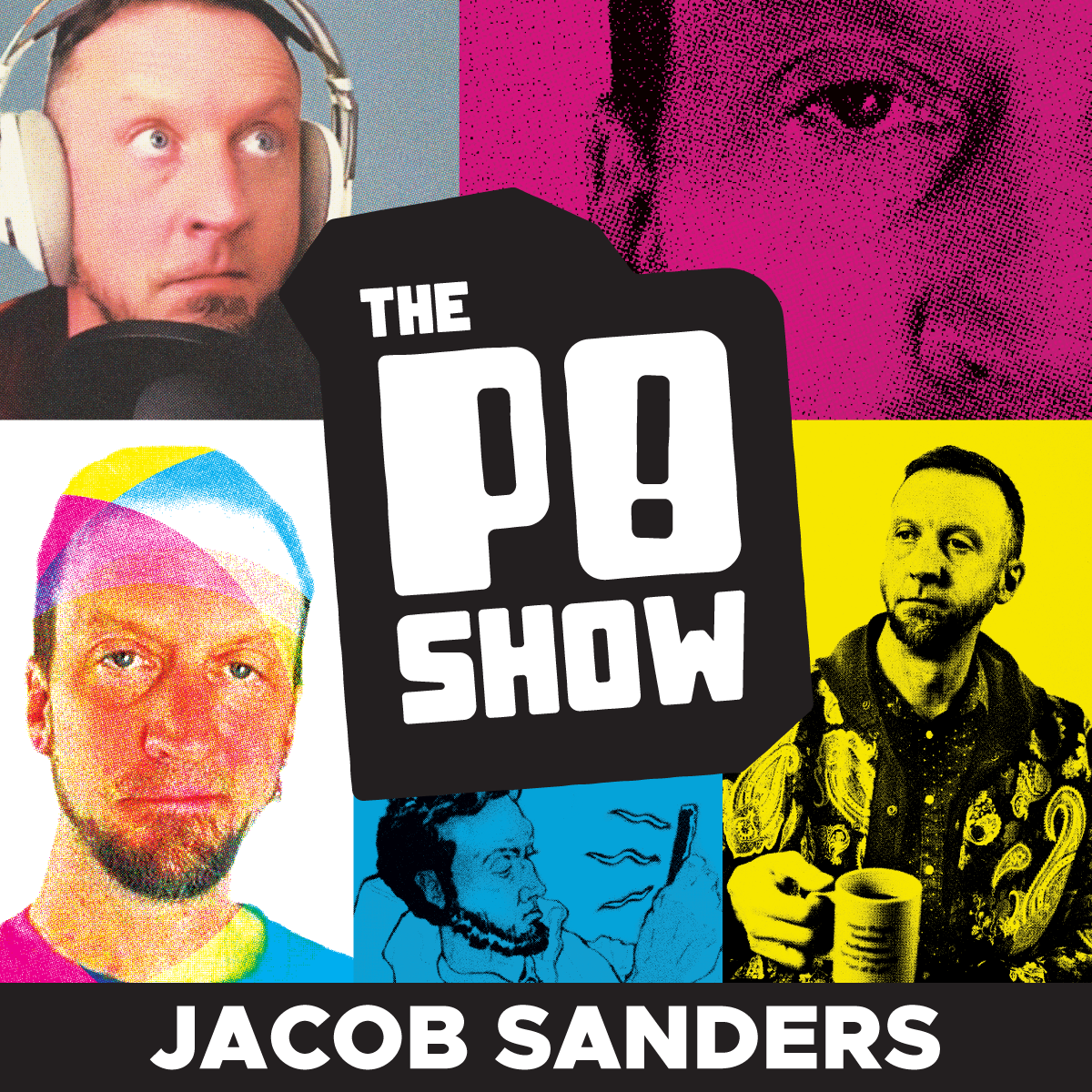
Episode #3 · September 16, 2026Cheap Genius: Why Nobody Wants to Pay for Creativity
Jake Sanders wrote the theme music for this very show, scored a documentary on a shoestring budget, and once turned a law firm's marketing department into a full stage musical. So when he talks about the gap between what businesses ask creative people for and what they're actually willing to pay for, he's speaking from the trenches, not a keynote deck.
The theory he's built around it is called Cheap Genius, the idea that when a client says "let's get creative," what they usually mean is "let's get it for free." It's a phrase Jake picked up mid-negotiation on a real scoring gig, and it's become his lens for everything from client pitches to why so much modern advertising feels hollowed out.
Cheap Genius is only half the episode, though. Jake's also an audio illustrator who gets into the actual physics of why a sound cuts through a room of a thousand voices in a way a logo never could.
Bonus material: a hip-hop verse broken down bar by bar, and a scapegoat god named Blamo.
Worth a look
Some of the goodies mentioned, just one click away.Books & References Mentioned in the Episode
Something Wicked This Way Comes — Ray Bradbury
Oryx and Crake — Margaret Atwood
House of Leaves — Mark Z. Danielewski
De La Soul — "Stakes Is High" (official video) — Posdnuos's verse Jake breaks down line by line
The Fall of the House of Usher — "When life hands you lemons" clip
2 Ways to Listen, Wherever You Already Hit Play
The Brand BuilderFrom “flyering” for a Montessori school to scoring a documentary about a Middle East peace treaty on a shoestring, Jake Sanders' road into marketing runs through a law firm, a museum exhibit on fluid dynamics, and a stage next to Big Daddy Kane. This is the full story. Cheap genius, hip-hop as poetry, and the physics of why a sound sticks harder than a logo.
The PO NotesThe theory behind "cheap genius," why resilience beats brilliance, and the science of why a jingle hits your brain differently than a color ever could. If you've only got fifteen minutes, start here.
Show Transcript
Intro Phillip Oakley: Today's guest is someone I've had the pleasure of knowing for quite a while, and you've heard our theme music, which means you've already heard his fingerprints on our show. Jake Sanders is a Grammy-nominated musician and composer, a creative marketer with over a decade in the trenches, and the creative director at Audio Content Lab — the very team behind The PO Show's sonic identity. He's also a founding member of the Marketing Accountability Council and content marketing manager at NinjaCat. Jake has managed million-dollar budgets and also been the budget. He's been in the boardroom and locked out of it. He's lived through every algorithm update, every pivot to video, every AI hype cycle, and every data breach — and somehow come out the other side with both his sanity and his sense of humor. Jake's appeared on over 30 albums as a performer, writer, and producer, and he's a working musician who's toured with hip-hop legend Big Daddy Kane. So when he talks about how brands sound, he's not theorizing — he's lived it, on stage, on the road, and in the studio. If you want to understand why audio is one of the most underutilized tools in a marketer's toolkit, you've come to the right place. Jake, welcome to The PO Show.
Jake Sanders: Man, thank you, yes. And I had a blast making that theme — it's always great to get a custom music request. Make it sound like this but not that, and then I get to put my fingerprints on it. Yes, I'm glad, thrilled to be here.
Phillip Oakley: Yeah, you did too. I want everyone to know how much the team loved it. It was like a gift to open — gently pulled the ribbon, not knowing what was in the box, and it was fantastic. So thank you.
Jake Sanders: Thank you for the brief. Thanks for a tight brief.
Phillip Oakley: Type-A briefs, love it.
The Appetizers Phillip Oakley: All right, so let's kick off our three questions. Of all the things you somehow crowbar into your extra time, you're also the host of the What Gets Measured podcast. Do you have a top wishlist guest you've yet to chat with?
Jake Sanders: It's crazy, because one of the things you experience is you just ask people and they'll be on your show — though there are barriers sometimes, some people want money, and you have to say, okay, I understand that. But top wishlist — do they have to be alive? Wouldn't it be crazy to get David Ogilvy on?
Phillip Oakley: No, who do you actually want? Let's be fun with it.
Jake Sanders: Rosser Reeves — the father of the unique selling proposition, 'melts in your hand, not in your mouth,' we all remember that. Bill Bernbach — any of these legends, honestly. But for current ones — Peter Field, Jenny Romaniuk. There's people out there, and I'm surprised, because you just gotta ask.
Phillip Oakley: Nice. Second question — who would you be if you were a 90s R&B song?
Jake Sanders: There's so many, I was like, man, what even counts. I went to the top 100 and landed on 'Real Love,' Mary J. Blige — because it's too easy to fake the funk, and when you find somebody who really loves, not just pretends to — real love, that's real. It can happen in nonsensical places, in music, in business, in a chat with a friend. I like real love. So I'd say that might be mine.
Phillip Oakley: Love it, that's fantastic. Okay, third question — what are three of your favorite brands? How did you first find out about them, and when's the last time you bought them?
Jake Sanders: It was wild sitting down with this one, because I said, favorite brand — semantically I'm pulling all those strings, like, what do you mean, I don't stand for brands. And then I look around and go, no, pay attention to the question. American Giant was the first one — a clothing company, they make durable stuff. I've had a hoodie for years, it's falling apart but it's still there. High quality, but a rare purchase — do you want a hundred-dollar shirt? I don't know, but it lasts forever. And it's something my mom put me onto — a lot of these brands come from my childhood or from people I know and trust. Second, after looking around the house, I realized my second favorite is Kellanova — like a family of brands, the Cheez-Its, the Eggos, the Kellogg's, all that stuff. When I was a kid, those small boxes of cereal blew my mind. Discovered in childhood, and now, raising kids — I've got four daughters — I'm transitioning the Kellanova dynasty. I'm a Cheez-It man. And third, New Balance. I'm always wearing them. Here's the thing — I have big feet, size 16, so I don't get nice things. All the fancy Adidas, all the fancy Nikes — they don't make them for giants. You can go to the fancy basketball store and it's $300, $400. So, New Balance — sensible shoes, bought yearly, discovered because of a barrier to the regular fashionable marketplace.
Phillip Oakley: Nice, nice. You appreciated having something available to you. I gotta tell you — we've joked for years about you being tall, and every time I see a photo of you with someone I think, I still don't know how tall that person is either. But then I saw you on stage with your sax, in a Big Daddy Kane video, live — having fun, doing a little break dancing — and you stood up and towered over the rest of the band. I was like, holy smokes, the guy is tall. How tall are you, Jake Sanders?
Jake Sanders: Six-four — I mean, six-five. I have six-five. But as I'm getting older, it goes down and my feet get bigger, so I don't know what kind of magic is happening. I've managed to take this giant form and it's sort of become my personality — I've been sort of a walking stick, so I've lived a charmed life, because I think I'm just so bumbling, like a green giant. It's odd, because I look at you small people and hit my head on your doorways, and I understand you, but it's different up here.
The Meat From Museum Educator to Law Firm Marketer
Phillip Oakley: Love it. All right, so we've talked a little bit about Jake's feet, his time on stage, and his cereal preferences — let's get into the marketing origin story of Jake Sanders. Most people don't start their marketing career at a law firm. Can you walk us through how you got started there?
Jake Sanders: So I was working at a Montessori school in Manhattan — I was an administrator, sort of in charge, sort of like the clown. But I started to get a sense for marketing, seeing the positioning the preschools were doing. This is 2007, 2008. So I started to flyer — and as a marketer, as a musician with a band, flyering, you understand marketing in a way. Then I got a job at the Denver Museum of Nature and Science as a museum educator. I'd dress up like a flying squirrel and teach kids about fluid principles, or pretend to be a game show host and go through the biome of your stomach. So I had a sense of how to take educational material and make it entertaining. Then I got a position doing marketing — answering reviews for a hotel chain. A friend asked if I wanted to do it, and I loved writing, so I would respond on behalf of this hotel chain. I just started saying what I wanted — having humorous engagements with people, putting some English and spin on it. And the hotel chain reached out to my friend and said they loved it. I was like, ha, you can just say stuff, and in a certain way it gets a reaction. Then there was an opening at a law firm for a social media position — not director. I said I could do that, got the position, and slowly started to discover my boss, and that it was just its own thing. That's how I came into it.
Phillip Oakley: It's really funny that having a voice and personality is one of the biggest things that gave you the lightning rod for knowing this was something you not only enjoyed, but that stood out enough for an organization to take notice.
Jake Sanders: Right — I was okay with performing a bit. A lot of people want to perform the serious role, and I was okay performing a bit of humility and connection. It got a reaction, so I thought, maybe I can be a businessman — which is the hardest role to play.
Phillip Oakley: Yeah — and this is something I didn't know about, the hotel chain thing. But again, how many people are trying to play it safe, especially in B2B — copying what they saw someone else do on social media, or their favorite influencer — instead of showing a little personality and standing out.
Jake Sanders: Right, and making a connection to something specific. That's why the review platform was interesting — they're rating you, giving you stars, saying negative or clearly positive things. There's a clear way you're supposed to react. Wouldn't it be funny if — and then I realized I couldn't keep it up at scale. I was cooking on my own, putting little fun wigs on things and sending it out. Now you want me to do that a hundred times for every thing? There's a stamina to performance — if they like it, be careful. So what happened at the law firm was different. It was about competitor law firms — we're doing what they're doing, showing what they're doing, look at all your billboards, wherever these people live in the audience. It's mostly law firms taking up that space — the radio space, the TV space. So what I experienced there was an actual media budget, defended vociferously. I came in as the social-media guy thinking a comment can change the world — YouTube, all the kids are doing YouTube. I didn't know about the legacy of advertising — not marketing, advertising, the history of it. I was like, we're spending two million dollars a year on TV, no one watches TV anymore, you dinosaurs, cavemen running around with the torch, it's done, radio, get out of here, it's not defensible, you need YouTube, you need social, you need content. And it was sad — but the best thing that happened is they didn't throw me out the window. They let me run a bit, and then they let me see something most marketers don't get to see: the P&L. They showed me, and I went looking for what channel was really driving it — radio, by ten to one. Everybody was listening to the radio. All these law firm clients were coming straight from the radio. Second to none for TV. Why? He'd been doing it at this law firm for 35 years at that point — he had a legacy, a fame-connected brand, a figurehead personality. I wrote TV scripts for him, radio scripts. I started to realize how important it was to get customer qualitative information to make the quantitative — everything — happen. At the museum, you can't make up facts about gravity, you've got to be serious. At the law firm, it's either illegal or it isn't. So you've got hard lines you're navigating, a deliciously sized budget, and open extensions — you want this gig, take this gig. So I became the marketing director and ran it for a couple of years, then it switched into the next gear.
Phillip Oakley: You touched on this a little, but did you learn anything about accountability there — obviously in a regulated industry — that most marketers don't learn when they're out trying to sell chips and soda, or whatever fast DTC brand is marketed only on Instagram?
Jake Sanders: Yeah, I learned a lot about internal communications — most lawyers are strapped for time, they live and die by the time sheet. I saw that with ad agencies too, the busyness of executives and the pain of time sheets. I didn't really understand how tight that has a hold on everything. So I learned how people use time, how it's measured, why it's important — so what you say has to actually be important. I learned, most critically, how to get to the point and be as brief as possible, because this person's paying $300 to read it. You start getting all your ducks in a row, instead of, oh, I'm working on this, check this out, did you know I'm doing this — hold on, wait, keep your powder dry. It taught me how to be accountable for the way I communicate — valuing my time, valuing the audience — and seeing that translated at the law firm, asking people how they saw us. It ended up being the craziest thing — was it the way I wrote the copy in the TV ad? No — it's his eyes, he has trusting eyes. What about the lighting? Nah. What about the funny? I kept pushing humorous ideas and cartoons, and they let me run with it, and it worked. But what you think is driving something and what's actually driving the behavior are these intangible things — and respecting that, knowing it can really drive things if there's a huge engine behind it. But getting the engine off the ground — I don't know how tough that could be, because I had a charmed life, I walked into a two-million-dollar-a-year media budget. Then I came back down to the regular marketing world, where no one has that, and my salary became the marketing budget. And they're like, why aren't you giving us ROI? I was like, I'm just a guy — where are you going to take it from, my what?
Teaching Too Much, and Why the Customer Should Care Phillip Oakley: Man, there's so much to unpack there. Something I've caught myself doing — and I've done it for a while, but I've really paid attention to it lately — is trying to teach too much when I'm talking to clients. Maybe it comes from facilitating, where I'm actually teaching. But it's also justifying my existence, justifying why we want to make recommendations, why we're going to change minds — when ultimately these people are worried about nine thousand other business decisions besides why brand matters right now. What did you do with the marketing budget? And they mean advertising, of course. I've been in this industry for a couple of decades, and I can't tell you how many people I've heard on the agency side talk smack about the client — they don't get it, they don't know what they're talking about. My response for a long time has been: no, we're not getting through to them. And that's different. That communication is on us.
Jake Sanders: Yeah — and as an educator, that's another thing that makes marketing exciting, because it's a chance to educate.
Phillip Oakley: And entertain.
Jake Sanders: God, I wish it was. I want that. You're talking to a person who's ridden the roller coaster of romantic thinking and ideation around this profession — I'm an idea man, and then, they want the ROI, then I'm the analytics guy, then they need to know statistics. It goes up and down. But I think the thing that holds you together is — what was I talking about, I got lost on the roller coaster.
Phillip Oakley: Why should the customer care?
Jake Sanders: Right! The roller coaster goes up and down — is it education, is it entertainment? You gotta make them famous. You read Paul Feldwick and it lights a bulb that was missing, that somehow had a lampshade over it. It is an education. I'm lucky in my podcast pursuits to talk to people way more experienced than me — data leaders who talk about education, but they're talking about data. I think, man, if they could just understand at the data-professional level — these data scientists stuck inside silos — they could be educated about the importance of this stuff. But then Malcolm Hawker — imagine you're in a marketplace selling something real, bread. Nobody's coming to your stall. Is it that they don't know what bread is? That they don't have education on the types of wheat, the grain, the milling? Is that why people aren't coming by? No. It can't be. So I'm thinking, you don't just need to get educated. And how many times have I created a metaphor, a musical, for marketing — different ways to creatively express the thing, not reference it directly, but tangentially. I don't think education is the point. They have to have a feeling. There's a book, Bonk — another history in the P.T. Barnum vein — and Paul Feldwick's Why the Peddler Sings. It's not that people don't want to get taken, it's that they want to knowingly be taken.
Phillip Oakley: They don't mind the humbug as long as they know it's the humbug.
Jake Sanders: That's it. Humbug — that was the word I was using. As long as they're in on the con, they're down. It's kind of like — if you're a young guy wondering why all the girls are dating the jerks — it's not that they need to be educated, it's that the package is just a bit more together over here, and they don't have to think that much. So education is really more about relationship-forming. It comes through, like those early reviews — making a funny observation about something you share, and building a relationship from there.
Give Yourself Work Phillip Oakley: Perfect. So you've talked about so many different things marketing has to do — and how many people can actually do them all? But when you're creating the musicals, creating your own content, there's so much fun, so much creativity in it. I can't tell you how many times I've taken my phone and said, look at what Jake's doing — Jake rapped about this, it's fantastic. Where did you start figuring out how to connect marketing and your music?
Jake Sanders: My parents worked — my dad was a radio DJ for a long time. I fell asleep to him on the oldies station. I'd hear his voice at home, then hear his voice on the radio, and it was the same but different — he had more something. I started to notice the way sound can be heightened to a presentation state. I got to experience the home life and the professional life together. My parents also worked on on-hold productions — they'd find music, write scripts, and record them. So as a kid playing with Hot Wheels in the basement, I'd hear, 'Thank you for calling, please hold, one of our representatives will be with you shortly.' I'd see there was a room where special things were happening, scripts being worked on. I got to experience sound and music and how you could use it — I thought it was hilarious. Slowly I got into music, and then into marketing. I had a college degree in composition — jazz musician — and I thought, you should just start doing more things. So one of my takeaway lessons for everybody at home is: give yourself work. You mentioned crowbarring in extra time — I don't have more time than anyone else, I just go for it, and I don't put off the stuff I have to do. Creative people are always like, 'I want to dream, I can't keep a calendar together' — but I love jazz musicians, they're the worst, and I'm always the first one at the gig. I've got a marketing sensibility with a musician's heart, and I realized no one's really doing that. So the first thing I did — I wrote a law-firm version of A Christmas Carol. I was in charge of a podcast for lawyers, and I'd interviewed a couple lawyers with theater backgrounds. Two years in, I said, I'm going to write a Christmas Carol, but it's the spirit of the customer, respect of the law firm, adherence to the good things I'd heard. I found all the problems with the industry, created a target audience — law firm owners trying to market their business — created a fleet of characters, scored the whole thing, and it just took off. No one asked for it. No one said no, because they were like, what is this? I just did it. So all of the stuff I've done — no one asked me to do it. I just go and do it. A lot of people are waiting for somebody to give them creative license — forget that, you just have to do it. And if it sucks, it's on you to own that, because I'm shocked most people haven't said 'this sucks' — they like it. I'm expecting that, waiting for it. The worst thing that can happen is indifference — if people abjectly hate it, that's a reaction, if they love it, great. Indifference is the worst experience. So — give yourself work. That's my thing.
Radio Voice, and the Difference Between Performance and Attendance Phillip Oakley: I like that. Going back to your dad's DJ voice thing — do you know Chris Voss? He talks about having a 'radio DJ voice' — using it in negotiations, to bring people down, to de-escalate.
Jake Sanders: Is this the Never Split the Difference guy?
Phillip Oakley: That's the one. I don't have a DJ voice, but you do — my point is, that stuck out to me, because it works.
Jake Sanders: Is it an affectation, or is it performance? I don't feel like I'm — well, you're pretending to be a businessman. You're pretending to care about this person talking to you about KPIs. You can pretend, we can pretend a bunch. You pretend to care about your loved one — not that you don't genuinely, sometimes — but that's the difference between performance and attendance. You attend to this moment with a person, and it's not a performance, you can do whatever you want. But if you're performing — yeah, you're a fake asshole.
Phillip Oakley: So how much performance do we see every day on social media without substance?
Jake Sanders: Well — how much performance am I doing too? That's the other thing. You need some self-recognition of yourself out there. But the algorithm, man — it's tough out there. We used to do numbers on Twitter.
Phillip Oakley: Yeah, mate, now there's so many pods and tricks and hacks to push — I'm trying not to label these people, but so much of life is, I hate to call it a performance because of the negative connotation —
Jake Sanders: I think you're right to use it, I see what you're saying, but it is.
Phillip Oakley: There's a cap you have to put on when you present work — you've got to be prepared to get the shitty looks and power through them. There's a roller coaster you take people through, they're ready to object, and then they come out of the tunnel and go, wow, I want this in my life. That is so much performance.
Jake Sanders: Well, it's attendance to the energy in the moment. That's why the next questions are going to make sense — what we talk about next, with music, explains this difference. Only a true performer who's engaged in the performing arts — this isn't some person pretending.
Touring, Recording, and Finding Energy on Stage Phillip Oakley: But in that case, the performance is for the audience, right — whether you're a comedian, playing sax, or you're Big Daddy Kane. You're not looking in a mirror like some douche on social media trying to make numbers, you're there for the crowd. Talk to us about being that working musician — being on the road, getting that feedback live.
Jake Sanders: I had to write this down so I don't ramble too much, but there's a couple things I've learned. Going on tour, different places, buses, flights, red-eyes — one thing touring taught me is you find the energy when you hit the stage, and only then. Before that, you don't have it. It's not about brilliance, it's about resilience, and I don't think you learn that until you go through those paces. You'll find the energy, because I was always wrecked, never ready, and then the minute we hit — it's insane, something comes through you if you let it. I don't think you get to a spot where you have energy — you find it when you put yourself in the moment where you need it, and sometimes you have to be forced to need it. Recording is different. The red light comes on and now I'm going to play like a moron — that's what happens, because you practice alone and you're beautiful, and then the minute you get the red light, you act like an idiot, all stiff, you don't know what's happening. But after a while, once you get used to it, that focus, that idiocy — that's actually why the first take is usually the best. It's the most honest, not the one you took 300 times. There's a lot of thought in recording where it's like, take 300, 400, 500, and then I got it — very rarely is that actually happening. That moment is usually everyone else giving up and saying, that was it, can we move on. What you find is the first hit is the most honest, and you only get to experience that when the red light goes on. Composing is different again — the first take is rarely the best when you're composing songs, you have to keep hammering it. Recording is capturing the moment; composing is creating the moment. You get to experience something that almost never starts the way it ends. Creativity is usually — holy shit, this is Olympic clay, holy shit, it's the Statue of David — that's just how it goes, you can't find that in there, and then Michelangelo says, we did it. No — he did some serious work. That's composition, you can endlessly work ideas if you have the capability to do it. Performance on stage — you practice to perfection. If you can't play it slow, you can't play it fast. If you can't explain something slow, you're not going to be able to explain it fast. All these rules transfer to everything in life. You practice to perfection and then you let it go. You don't lose your nerves when you perform. The most common comment I get is, you looked like you were having fun. I never hear, you nailed that passage, that was excellent and technical — and when you hear those people, they're weird people, like, you liked the E-flats, get out of here. So it matters more to the audience to see you have a good time and be in the moment. But it matters more to me to be technically fluent, to the point where I don't have to question whether I'm going to have fun or not. So nailing it is a key KPI for me, because I go for excellence.
Excellence vs. Exceptionalism Jake Sanders: And the last point is the difference between exceptionalism and excellence. I get to be on stage, and people would say, he's the exception to the rule. I'm on that stage because I'm excellent at what I do — I adhere performance to rules. What people see on stage looks like you're the exception to the rules, kicking dust in the face of standard people living normal lives. But that's not what's happening. People think fame is an exception to following rules, when actually the longest, most vibrant legacies come from people who exude excellence, rather than publicly propose their exceptionalism. There's a big difference between being an exception and being excellent, and most people have forgotten that. I get to learn that on stage, being with Big Daddy Kane, adhering to rules of hip-hop that are 50 years old — for a tradition that's 100, 200 years old with jazz — you're sitting on a dynasty. Excellence is required. That's one of the problems — people think the goal is to be exceptional, when no one's shooting for excellence. And that's why real love is needed.
Phillip Oakley: Not to take us off track, because I want to keep talking about music and craft for a moment — but goodness, what an example of brand versus performance. To be a long-term brand that people recognize, you must be excellent consistently over a long period of time, and follow the rules you make for yourself. Sure, we all get lucky — you can be exceptional for 15 minutes, or for one buying season, or introduce something new to people, and they'll know who you are until someone steals the market out from under your feet, and you're forgotten forever, because you never strove for excellence.
Jake Sanders: Because you forgot that background radiation of excellence — that's the whole thing. How do big brands come about? People say through exceptional behavior. No — excellence at playing this marketplace, at reading the room, at nailing those passages.
Phillip Oakley: Yeah, sure, sure.
Jake Sanders: You made the right call switching it into business, because that's how your mind needs to move — you have to be poetic, because if you're prosaic — we were talking about jazz — no, make the shift, you're exactly right. A lot of people are out there thinking the history of brands in a marketplace was the exception — they were just exceptional, and they want to be like that. Well, you don't deserve to be on stage. You're the Milli Vanillis, the one-hit wonders — not the person continuously drawing crowds. I've experienced that through music, so when I talk to people about brands and marketplaces, I'm aware of this gap in what they really understand about what it takes to be famous — to hold down a legacy.
Poetry, Storytelling, and "Stakes Is High" Phillip Oakley: True. So — if you haven't followed or connected with Jake, you have to go watch some of his musicals and content. You're so good at the parables and the metaphors and the storytelling — it just lights you up, anyone who's listening or watching a clip of this can see it. Can you talk about that connection between music, language, poetry, and storytelling? Why is that so much a part of your makeup?
Jake Sanders: I connect it to my love of humor — that's a gateway for me from a very young age, and it led to all my pursuits. But it's mostly related to creative writing, which is my first talent — I went to the Denver School of the Arts. I love poetry, the economy of words. I love the economy of notes with jazz. It comes through the arts, and it comes from my mom sitting me down, schooling me about grammar — she'd show me the Marx Brothers, Shakespeare, a real cultural buffet. She was a fierce intellect and made me see the power of words. The thing that really lights me up is hip-hop and rap — it's probably one of the highest, most elevated forms of poetic expression we have. You can't waltz by it, you can't listen to it without being overwhelmed. I want to do something here — Posdnuos's first verse on 'Stakes Is High,' from the same-titled De La Soul album. I want to read it and then explain why it's amazing, and what that guy could have just said plainly.
Phillip Oakley: Yeah, let's do it.
Jake Sanders: This is why it lights me up, because a lot of people say, you could have just said you like this — no, let me explain.
[Jake reads Posdnuos's opening verse from De La Soul's "Stakes Is High" aloud here. Full lyrics aren't reproduced in this transcript — link to the track is in Worth a Look above — but Jake's line-by-line breakdown continues below.]
Jake Sanders: Pound for pound, that's some heavy lifting. He opens on a camera reference — the Instamatic, the focal point — locked on a moment where a neighborhood could be damaged. Then a location and a group identity, De La Soul, coming from the East Coast — and saying 'from the east' in 1997 is a whole flag, with Pac and Biggie, the war between East and West happening at that exact moment. So you've got a cultural reference from a 1963 camera and a localized identity, all within the first two lines — the story's set, and you're only two lines in. Then he shifts into Newtonian dynamics — gravity, inevitability, everything being pulled down to earth — and one of the things being pulled is a citizen in a shootout scenario, which leads into guns. That's one of the most powerful lines in the verse. It could crush your soul if you're living in America, understanding the pain and grief around shootings. Or he could've just said, we're great, we're important, things are tough in our neighborhood. Instead, by the end, he's saying this should be canonized and it shouldn't even be notable — but he has to say it, and the only way is by an escape hatch into a higher form of expression. He didn't have to say all this. He could have said it plainly. And musically — it's a nine-bar verse, four-four time, bars of threes, the bass line's in threes. There's a whole tension happening with the bass and the horn. It's exquisite. What lights me up about it is this can happen to you in 30 seconds — your whole life could change if you attend to it. Music gives you a chance, because you don't have to think too hard, music is a metaphor itself, it's expression. And that leads into the Audio Content Lab thing — like music, you don't have to explain why it's hitting you, and you can't. Poetry is the form of prosaic language, but music is the poetry of life. Those are the things that light me up, and if I ever get a chance to talk about it and share or create something with it, that's what I'll do.
Phillip Oakley: Absolutely love it. We'll make sure we get the song linked in the show notes. But holy moly — again, all the metaphors. How many brands, especially in tech and B2B, are the worst at this — going out and saying 'we do XYZ because one, two, three,' instead of — there's a reason we remember cereal commercials from 1983. I wanted to be a Toys R Us kid, I wanted to go to McDonald's — forgive me, I'm not grasping a good B2B example right now, but they're out there, examples of memorable things where someone actually tried to get our attention, entertain us, bring us in, tell us a story or something we relate to.
Jake Sanders: Yeah — and that's the whole thing. I could point to MongoDB, who created this amazing audio-fiction spy narrative, all about data — it was cool, a standalone podcast, dramatic, really dope. But it's an activation, it's a campaign, it's a one-off, let's try it. Back in the day there was more of an affinity to say, this is how we're coming out swinging and we're going to stay with it. Mutual of Omaha sells life insurance — why are they creating a Saturday morning cartoon about animals? It makes no sense. Why did they do that for 60 years?
Phillip Oakley: There's something to it. I mean, it's fantastic.
Audio Illustrator, and the Physics of Sonic Branding Phillip Oakley: So most marketers — and I need to be careful with the word marketing, because there's so much more to it than promotions — never study poetry or composition, or take the time to understand how those stories are being told. Like the song — it's just a song, right? No, there's a whole life flashing before our eyes. There's a lot we can take from that discipline. I'll call you a unicorn, because you're so unique. One of the titles you hold is 'audio illustrator.' What a visual description of what you do — can you explain to the audience what audio illustrator means?
Jake Sanders: It was a turn of phrase — I love rhetoric, the economy of words. If I can pop something into your brain with a couple words, I'm going to try and do that. I thought audio illustration was a great way to describe the effort I'm putting toward sonic branding — the effort I put toward composing, toward being a jazz musician. Spontaneous composition is essentially improvisation — Mozart, Bach, Beethoven, Vivaldi, all killing improvisers, that's how they got into composition, they'd improvise their way into things. It wasn't necessarily that they'd compose these great works, it's that they'd wander around — sketching, brushing, firming up the line. There's an analog with illustration and audio, sonic canvases. Audio illustration, I think, is what I hope to do for a client — hope to have a relationship with an audience.
Phillip Oakley: Again, so much is misunderstood in the entire universe of marketing — people come to a creative and say they want a thing, and what they want too often is something they've seen working — 'here's the top 300 hooks on Instagram this week, buy this package.' That's not what you need — you need something custom. A custom illustration. And when it comes to branding and brand identity, the whole point is to not make it a commodity, a copy of something else.
Jake Sanders: It's hard, because to think like a brand is to actually minus out your brain — you're not thinking like a man anymore. I created a marketing science-fiction series, a Twilight Zone anthology audio drama called Outbound, and one of the failed ideas was 'Brand Man' — if a man becomes a brand, they're not thinking like a man anymore, they're only making decisions that brands can make. If this audience is full of creatives, you've been shot down for being 'not on brand' — probably most people get shot down for being off brand. What is off brand for you, as a human? Is that how you base your decisions? Brand, on brand, off brand — that's why I'm saying branding is hard, because it shuts your brain off from the human marketplace. You're adhering to this invisible thing — well, why can't you think of a different invisible thing? Branding is interesting — you'll argue about colors, about words. But sound is more primarily affecting. And why I focus on audio is — the sound of your name is the one thing your brain can pick out in a sea of a thousand voices. If your mom calls your name, now you're into a different world of association, deeper memory, heightened attention — because a thing has been said in a certain way by a certain person, and you have a deep memory with it. It shuts your brain off — I'm just envisioning my mom saying my name, and it's giving me chills. We already have the complete set of gear in our brain that picks up signals in audio noise. Whereas you have to train people to notice colors and logos, consistency in words — you have to see that red to know it's Coke red, and now it's inherent because it's been hammered into our eyes. But music is already a metaphor, you don't have to cram anything in — it does the work of memory and association. There are places on your brain — tonotopic maps on your cochlear membrane, in your ear, and if you put a keyboard over it, it maps perfectly to a piano keyboard. There's a place on your brain stem that rings a C-sharp when it hears a C-sharp — they can record your tonotopic map when you hear music and play it back, and it'll be the music you heard, coming out of your brain like a speaker. If anybody's wondering if there's a way to physically impact your brand into a person's brain, sound is the only thing that can do it. It's a physical wave, it literally goes inside your ear. There is no red rainbow in your eye that's like red — it doesn't happen for color, it only happens for sound.
Phillip Oakley: Physical connection. Wow. There was an Ipsos report — forgive me if I'm getting this wrong — that showed sonic branding being 10x more effective.
Jake Sanders: I saw that too, and I hate seeing it, because it's like — great news for me, more things for people to ignore. I've got that Charlie Brown thing, I got a rock, great data, who cares. But yeah, sonic is deeply impacting — as a practitioner, I'd ask you, why do you think people are looking at this and not buying it?
Phillip Oakley: That's a great question. I facilitate some startups in the area, and when I present on brand identity — this is where the teaching comes in — brand is so much more than a logo. But just playing the Netflix 'ta-dum,' nine out of ten people in the room know it, and the tenth person is someone who doesn't watch movies or TV — they probably have time to make music instead. And then there's one that crosses the threshold between internal branding and external branding — which shouldn't be separate, there should be one brand — branding, training, and the actual values of a company. It's the phrase 'It's my pleasure.' And if you don't know Chick-fil-A — if you go through the drive-through and say thank you, they will never say anything other than 'It's my pleasure.' I'd challenge anyone to bring me proof otherwise. They've been trained to say it, it's on their walls, it's printed on the side of the Styrofoam cups. I can literally not even show the graphic — it's audible, visual, ingrained in the entire brand as an attitude. If I ask a room, 'what brand is this — it's my pleasure' — everybody knows it, even the person who doesn't watch movies. I didn't even have to say it was a fast-food restaurant. So that's one of my favorites, because it's more than just selling a thing. It's a behavior for an organization.
Jake Sanders: Well, let me tell you what that's getting me thinking of — it's an interrelationship. What's my relationship to Netflix? I turn it on or I turn it off — sometimes it gives me what I want, mostly it doesn't. When I go to Chick-fil-A, I'm getting a chicken sandwich, that's great. But the interrelationship of that phrase, 'it's my pleasure,' is transacted on the physical plane, the embodied marketplace of humans with relationships to other humans. And I think that's the most misunderstood part, because this 'brand over man' is the new — man over animals, brand over man. Brand is getting you to shut your brain down. So you want to be brand-centric, but you don't want to be cut off from the relationships. Chick-fil-A wove it into how they interrelate with people. If you have a brand promise that never interrelates with anybody, you have some empty mission statement, a kitten hanging on a tree saying 'hang in there, it's Friday.' The barrier for sonic identity is how interweaved it is in the product. Sonic is a great way to point at brand association, but it isn't proof of an actual tangible relationship — it can get you noticed, increase association, but it's not going to hit people unless you interweave it, unless you become human. Take your brand off that pedestal, take it like a rugby ball and get in there.
Phillip Oakley: Get in there. I love that. You've got to go understand the people — this isn't a framework exercise from a workshop or a color palette. It's a connection to people.
Jake Sanders: That's why a lot of the connections will be like, that's not the official Coke red, that's not the hex code — that's not the Jeep logo.
Phillip Oakley: On top of context — I'm thinking of a Ferrari, not Coca-Cola, there's got to be actual context for that color to land. But if I hear 'ta-dum,' there's nothing — I know what that is every single time.
Jake Sanders: Every single time. But yeah, 'it's my pleasure' is such a good one, because it's about human interaction. That's probably why it's so tangible.
The Brand Delusion Phillip Oakley: I love it. You've said a few times, and I want to make sure — so it's very possible, Jake, that the only people listening to this are my mom and dad — hi mom, hi dad — but tell them why you say brand shuts down your brain, because I don't want to assume the audience understands that.
Jake Sanders: I wrote about it for the Marketing Accountability Council — something called 'The Brand Delusion.' It came from that sci-fi concept, a brand becoming a man — what would we really treat a brand as? You don't have to go far — Citizens United, LLCs — people have sort of been doing this. When you have something you love, and somebody says you should become a brand — now you're a brand, and when you enact on behalf of a brand, you're not yourself. You can't be — unless you're working on stage as a performer, a news-anchor-ish relationship, where I'm not the network, I'm the face, but I'm still here to give you a human touch. Where the brand — you can't be yourself. That's the thing about leadership — CEOs, executives, being empathetic. Sometimes you might not know the answer, and that's okay. As a leader, you need to — but no leader does that, because if you say 'I don't know what I'm doing,' you look like an idiot. So they'll never be empathetic, because they can't be. You can't advise people to be human when they're being brands — you need to create a foothold for yourself within the brand, if it doesn't have its own identity. That's why it's so important — no Chick-fil-A employee is wondering how to answer 'thank you,' no one's out there freestyling it.
Jake Sanders: You say 'my pleasure' — we have planned for this. If you don't plan for it, you have anxious people thinking, 'I think the brand would do this, I don't know how to even behave like myself.' You don't just create sad workers, you create bad representations of your brand — misshapen ambassadorship, because you failed to give any autonomy, agency, or actual stage directions. So a mismanaged brand will shut your brain off, and a well-managed brand will show you the places where you can show up as a person. The turnkey relationship to franchises is, you can't rely on extraordinary people — you have to have simplified processes that ordinary people can do extraordinary things with, and give space for people to be themselves. Then you'll see more of a human brand — but it's a hard balance, I couldn't tell anybody exactly how to do it.
Sheet Music and Brand Consistency Jake Sanders: And so you have a lot of people burnt out — sorry, y'all — but the one thing performers understand is you don't get a break. You've got to get back out there, even when you don't like it, you're sad, whatever. Maybe in a way, having a bit of brand sensibility can pick the man up — it's not so much a weight you wear, but it could be a mech suit if it's prepared right.
Phillip Oakley: It's the sheet music that keeps the band consistent too, right?
Jake Sanders: And the conductor — there's an interaction, but no one's off-sheet soloing wondering how to deal with it. It's on the sheet music — a great metaphor. The notes are here, the time is here, the measure is here, the sharps and flats. There are dynamics, and we're allowed — that's now. So the notation of expression is maybe the formal realization of a brand that isn't dominating man, but helping him become that souped-up version of himself.
Resilience, Not Brilliance Phillip Oakley: Love it. So speaking of expression, and doing more with less — how does Jake take all this noise, all these things, and whittle these big ideas down into something short — into these two, three-minute pieces you put together?
Jake Sanders: I don't — you make a 20-minute musical about data management, Phil, that's what you do. And you realize they only get the clips. No one wants to spend time with long-form content. I got butt-hurt about that as an artist — this is me, this is my expression. And then you realize, no. My phrase is: you have to get comfortable with resilience. It isn't brilliance. If you want to be creatively successful, it's not about coming up with brilliant ideas — it's about being resilient enough to have a thousand of them, because they're going to shoot every single one out of the sky like a clay pigeon. And if you launch it like a dove of peace, you're wasting birds. You need to be like, all right, you didn't like that one, I've got another. Having places where you put them — this is a joke, one-liners go here, this is a story idea, story ideas go here. File management has been a good way. If I feel something tangible, I'll spend the time and try to spin it up. I was using AI for a bit to help compose things, and now I'm off it, because I just don't know what's going on there. I'll come up with an idea about Pinocchio and marionettes, go deep into Italian futurism, and come out the other end with something about modern marketing. Some people like it, most people don't — and as a jazz musician, I'm used to getting that.
Phillip Oakley: How many ideas do you have sitting in the books that you might add to or pick up?
Jake Sanders: It's numerous, and that's the problem — they're like public housing for my ideas, I want to get them into good homes. Some of them aren't even — I drew a cartoon of a spreadsheet smoking, and a CFO walking away tying his robe. And I thought, this is in poor taste, this is dumb, this is whack. And then I put it up anyway, and people loved it, thought it was hilarious. So that's another thing — you just don't know what's going to hit.
Phillip Oakley: Every idea you think is going to bang like crickets — no one sees it. And when you're casual sometimes, drop something on Twitter, a bad dad joke, or on LinkedIn — something real and human — a bajillion people say, I'm feeling this too, can we talk about it.
Jake Sanders: Maybe, maybe. That's another thing you learn in marketing — those signals aren't inherent to your self-worth as a creator. Why don't you like my music, why don't you like me — and when you're being expressive with art, it's even more dangerous. I get a lot of indifference to stuff I worked hard on, and I don't hear much about it.
Phillip Oakley: That's right. And that's what makes the difference — when you have to do these things professionally, and people come into the marketing department with their idea, or a reel that inspired their kid, or their neighbor's nephew's basement renter — great, put the idea in the pile. I have to do this 37 times today, probably on Sunday, and for another 30 years. Keep them coming.
Jake Sanders: You're either down there counting the canaries on the floor, getting your rickets, your black lung — or you're not in the mine at all, bro. So I'm just going to keep going down — there's some new ideas down there, I'm sure.
Phillip Oakley: And I have to mine them and bring them back up tomorrow, or else.
Jake Sanders: Covered in soot. Bad. Go back down.
Cheap Genius Phillip Oakley: So speaking of which — this carries into the cheap-genius theory, or, as the other line goes, 'hoping MacGyver shows up.' Can you expand on why businesses can't really fix their marketing with a potato, a paperclip, and some cigarettes?
Jake Sanders: My favorite. If people haven't seen MacGyver — 1990s, kind of iconic — he always, in the heat of the moment, could improvise a solution to get out of anything. I experienced this firsthand. I was hired to score a documentary about the 1970s peace treaty between Israel and Egypt — one of the funders wanted a full score. I live in Astoria, next to Little Egypt — there's a place you go smoke hookah and hear the most insane, dope, classic Egyptian Middle Eastern music, all the ouds and lutes. I thought, I'll hire these guys, create some strings. How much do you think that'll cost, this guy asks. I say $40,000, to get the studio and everything in New York. He says, Jake, what we're looking for is cheap genius. And I said, word, I'll do it for four. It was all going to be in the box, MIDI stuff — he was fine with it. I talked myself down 10x, so I also learned I don't have great bargaining skills — don't try to upsell me, whoever's listening. But 'cheap genius' — I started to see, as I got into more creative engagements through marketing, that no one has money. What they mean when they say 'we gotta get creative' is — creative doesn't mean what you think it means. You're an artist, a poet, a musician, coming from a place of fine art and literature — and when they say creative, they mean free. They mean no money, they mean we're 'creative' with the numbers because the numbers aren't there. And with music, it's the last thing anybody thinks about in a creative project. They have a movie, it's done, no music — you just put it on and edit it, and it gets crunched and placed at the end, 'good enough, good enough.' That happens in commercials, in other film work. The last thing people think about is the creative part. So you're creative, you meet cheap, and you really want creativity — you'd pay anything for it except money. And then I landed on MacGyver — this guy defeats crazy laser systems by blowing a cigarette in it, using chewing gum, whatever. There's a massive disconnect in the general population between what people think creativity is, how it functions, how creative people actually work, and what it takes to blow your mind. It isn't 'check this out, wow' — it's actually 30 years of thinking deeply, spending hours understanding a connection between two things that don't even seem related. MacGyver shows it happening in the drop of a hat — but real creativity doesn't happen that way. It's a lot of deep work. It's a lot of staring at the sky. And people ask, why would I pay for that, back to your time-sheet-strapped people — what's the value of that? If I tell you the value is, have you ever tried to find the ROI on a sunset — E.E. Cummings is fired, let's find someone else.
Phillip Oakley: Yeah — there's been some good commercials made over the last five to eight years, and I've reflected on this even before planning this episode. How much finding music from the 50s or 60s, stuff I didn't even know existed — the music selection and sound design is what really sold it. It wasn't the animatronic foxes on the boat.
Jake Sanders: Some killing ones recently.
Phillip Oakley: So 40K for those live musicians, bringing decades of experience into this documentary, is a steal compared to going to John Williams and saying, I want Star Wars. It's all relative.
Jake Sanders: Price anchoring — talk about that.
Phillip Oakley: It's all relative — but also, at 40K, that could be resourcefulness for some people. There's a place where there's creative resourcefulness, and there's a version where it's just being underfunded and gaslit. Is there a line? Because let's be honest — sometimes constraint can create better creativity.
Jake Sanders: That's what you think, that's what everybody hopes, and that's what ends up being the bare result of what happens, is — it's sad, because it doesn't make sense to say if I had more money it'd be better, because that isn't true. The problem isn't quality, it's distribution. And now no one thinks about that. If it's great, if it's funny, people will know about it — no. It doesn't happen. It never has. The only reason it happened is because someone underneath had a giant gun of money growing the corn ghosts. Everybody thinks the corn ghosts just showed up. No. You don't know how much of this is clipped, funded, faked, funked, jacked, juiced, beefed up, compartmentalized — it isn't real wood anymore, it's a Potemkin village we're walking through. Digital advertising has created a giant funhouse mirror of the thing I really loved — real classic advertising. It makes me upset, because it was cheap geniuses trying to hedge their bets, getting out of saying something unique, saying something everybody else can for as cheap as possible — the real estate as cheap as possible — so you get penny arcades playing Jurassic Park. It doesn't matter that it's Jurassic Park. It doesn't matter that you're hearing Mahler's Fifth out of some dirty hole in the wall — you better hope it's just music coming out of that hole. Everything's been flattened to be experienced as cheaply as possible, so people don't even know high quality when it shows up. There was a place where you went to experience high quality and you paid for the satisfaction. Now you don't pay for anything, all the distraction comes to you, none of it means anything. Shout out to the people who manage to do it anyway — it hits, it's important, and that's the kind of work I'd hope to continue creating — places where people don't need to think it's cheap or genius, it's just a moment where we interrelated and connected. That would be the hope, the end result of any work I'm doing, or advice I'm giving.
Distribution, Clipping, and Payola Phillip Oakley: Yeah, I love it — there's so much wrong out there. By the way, did you watch The Fall of the House of Usher, the recent Netflix series? There's a clip where the billionaire asks a cop investigating him: do you know what you do when life gives you lemons? The cop says, make lemonade, of course. He says, no — you buy up all the lemon farms and shut down distribution to everybody else, and then you tell everyone that lemons are like the new diamonds — you control so much of what's happening behind the scenes that it's not about the lemons anymore, it's about the perception of what a lemon does in one's life.
Jake Sanders: I've heard that quote, yes, I've seen that.
Phillip Oakley: It blew my mind — that there's armies of millions of people around the world being paid to make cheap clips of things, and that's why we have movie clips showing up in our Facebook feed, you click on it, it takes you to Netflix — someone's getting paid to clip that and force-feed it into your life, and I hate it.
Jake Sanders: Well — my dad grew up as a radio DJ in the 70s, and back then he couldn't play Black music on air. Payola — in my music business classes in college, they taught it as this horrible, disastrous thing, a big government crackdown. Thinking about it now, it was probably racist in the way they did that, since it was for Black music. Anyway — payola is not gone. It's the main reason we do this stuff, we're paid to get attention. That's why this paid, earned, owned conversation is fantastic — does the audience know the difference? Sometimes, sometimes not. It depends how you play the card. Did it look paid, you kind of want it to look different — did it look owned, you make it look that way. Nothing is really definitive anymore, and that's the danger we're facing now.
Phillip Oakley: I don't know — I think it's not just a plan, but who gets blamed. So now we have to hear about the adventures of Blamo.
Blamo Jake Sanders: This is a carnival of an episode — but this is just one walk down one street in this brain, and I'm excited you took this lane. Blamo was a creation I was working on, looking at the fall of the empire of America from inside it — realizing I have a colonized, captured worldview, my own mythology about the country, what's defensible. Clipping is being politically weaponized now — divisive stuff, wedge issues. I thought it'd be interesting to bring back Paul Bunyan — what if he came back? So I did some research — Paul Bunyan was created by the Red River Lumber Company in the 1900s, as a content-marketing vehicle. They were trying to deforest a patch of land, there were government regulations, a lot of Americans wouldn't cut down the forest because it was dangerous, so immigrants did it, and they brought stories with them — one was this giant guy, sort of German, sort of — an advertising executive at the lumber company created a whole legend out of it. I realized Paul Bunyan, this mythological hero I was looking to bring back a sense of American semblance from, is a goddamn advertising vehicle.
Phillip Oakley: A crummy commercial?
Jake Sanders: It's a cat, essentially — I can't throw the Red Ryder gun back at it. But that's the point — commercialization is so deep in this place. So I'm thinking about mythological characters, driving, somebody honks at me, points at me — and I thought, wouldn't it be cool if he had something in his car he could take his aggression out on, instead of me. And he'd be in the car going, 'goddammit.' And then I thought — Blamo. Imagine a business where the numbers are bad, and they ask, how bad — they're like, well, really bad. And they say, who can we blame? It can't be me, it can't be you. And then the guy says, hold on, I have an idea. No one wants to take the buck — it's so complicated to get a proper scapegoat anymore. What if Blamo was a scapegoat herder — like they used to be, when everybody was fighting and they'd run out of scapegoats, everybody's getting blamed for everything, so Blamo walks the earth wherever this nameless blame is happening. Because no one's taking accountability for what's going on — maybe my creative idea was good, maybe your efficiency idea was great, maybe the A, maybe the B — we never follow up on the stories, we never follow up on who. But I've been in marketing enough to know salespeople aren't going to get blamed as much as I am, and the CFO's going to be friendlier with the salespeople because they rain-dance. What do I do — I blame-dance. So then I thought, my job is to take accountability.
Phillip Oakley: Rain dance versus blame dance — love it.
Jake Sanders: Blamo is a creation, an explanation for runaway — nobody's passing the buck, nobody's holding it, no one's accountable, it doesn't matter. I thought — well, you're a marketer, can't you market and advertise this? Why are people buying Blamos, why aren't they? The lore is off, I don't have lore. So I have to create a sense of how blame — and I wrote a huge article about how blame and shame function in the modern marketing ecosystem, one of my highest-performing pieces, because I said something from my heart and applied it to a professional lens — didn't necessarily educate people, but got them thinking about how their heart feels doing this job, because it's hard. And I've been on enough stages to know that's great, because I get to play a show. It's not the same feeling being in a job — where's that moment? And I love that you, PO, are giving yourself that work — you'll do the performance, show up and present, take the lead. So Blamo is a character that gets us to just forget it — don't blame anybody, blame this guy, and get back in the game.
Phillip Oakley: Just take it. Absolutely.
Jake Sanders: It isn't about who's to blame, it's about getting back in the game. That took me three months to come up with, and no one asked me to do it.
Questions from Industry Friends Phillip Oakley: That's right, I love it. You're so fun to be around, so much creativity — I wish you lived closer, we'd have a beer. So, time for a few questions from our friends. First up, from Ant Henderson: marketers will spout off about storytelling, and yet they never share their favorite stories. What three fiction books would you suggest listeners read purely to experience the joy of storytelling, creativity, and imagination?
Jake Sanders: What a great question, I love Ant. What are those books I go back to — Something Wicked This Way Comes, Ray Bradbury. It's not like the film, it's so well written, one of those authors. Margaret Atwood — Oryx and Crake really set it in for me, this lady's not messing around. There's so many good ones because I read a ton — third one, I'd say Anathem, by Neal Stephenson. It takes you to another place, and the way it starts, it just drops you in — I was kind of annoyed, because I'm a picky reader, like, hold on, take me out to dinner before you start telling me the story. But it took off, and I remember leaving that book like, damn. House of Leaves is the fourth one — it's a book that reads upside down, parts are music, parts are missing, there's holes in it, you have to turn it upside down to read it. One of the most engaging reads, and the scariest book I've ever read — don't read it if you don't want to get freaked out, but it's amazing.
Phillip Oakley: I will check that out. You and I should talk about reading and watching films at too young an age, and how the 80s desensitized us.
Jake Sanders: My mom didn't care — she was very French about it, and it ruined me.
Phillip Oakley: My dad took me to see Conan the Destroyer in the theater when I was seven, and it broke me — The Exorcist didn't even bother me after that. So — our second question, from the lovely Liesl McDonald: other than being cool and awesome, what transferable skills might a professional musician bring with them to other parts of life?
Jake Sanders: We touched on this — I started as a saxophone player, but I've ended up playing piano a lot more, so I'm in the rhythm section, comping — composing behind the person as they're improvising. I started as a single note, only concerned with my part. When I broke into piano, I realized there's a whole thing — you experience it naturally in a symphony or orchestra setting, where you're one person in a whole row. There's something about the humbleness mixed with egoic agency, because you're one of many — but you'd better not mess this up. I enjoyed that balance — you could not play, or you could play the best you ever have, try it, and either way, it's still going to sound great. It isn't 'I did so great' — it's 'we did something.' That gets me to the 'we' more often. So that would be it.
Closing Question Phillip Oakley: That's awesome, man, I love that. All right — closing question. If you could communicate one thing to every marketing channel, in every city, around the world, simultaneously, what would that message be?
Jake Sanders: I'd be loath to be just one thing — but I'd say: easy to buy, easy to try, and easily thought worth it. That might be the key in all of this — engagement with people, engagement with your brand — there shouldn't be a question, you should always know where it is, and know where to get it.
Phillip Oakley: Make it easy to buy. Make it easy for me to get to it and try it. And by God, make it worth it. There you go. I love it. Jake, man — I have so much to add to the show notes for people, lots of links out to your fun stuff. Where can they find you online, my man?
Jake Sanders: I'm on LinkedIn a lot — using it as social media, no one else is, so that's weird, people only go on there to look for jobs. But you'll find me on LinkedIn. I've got a blog, Marketing Accountability Council, Audio Content Lab — I'm the executive director — and What Gets Measured, the podcast. I'll give you all these links, but I'm a lot of places.
Sign Off Phillip Oakley: We're going to have to have another episode just to talk about data and marketing accountability — those could each be their own episodes. But I hope to have you back sometime, my man.
Jake Sanders: Totally, man — thank you so much, this was a wonderful time.
Phillip Oakley: Brother, good to see you.
Keep It Coming