Mark Hadfield
Founder, Meet the 85% · Co-Founder, Dose of Reality
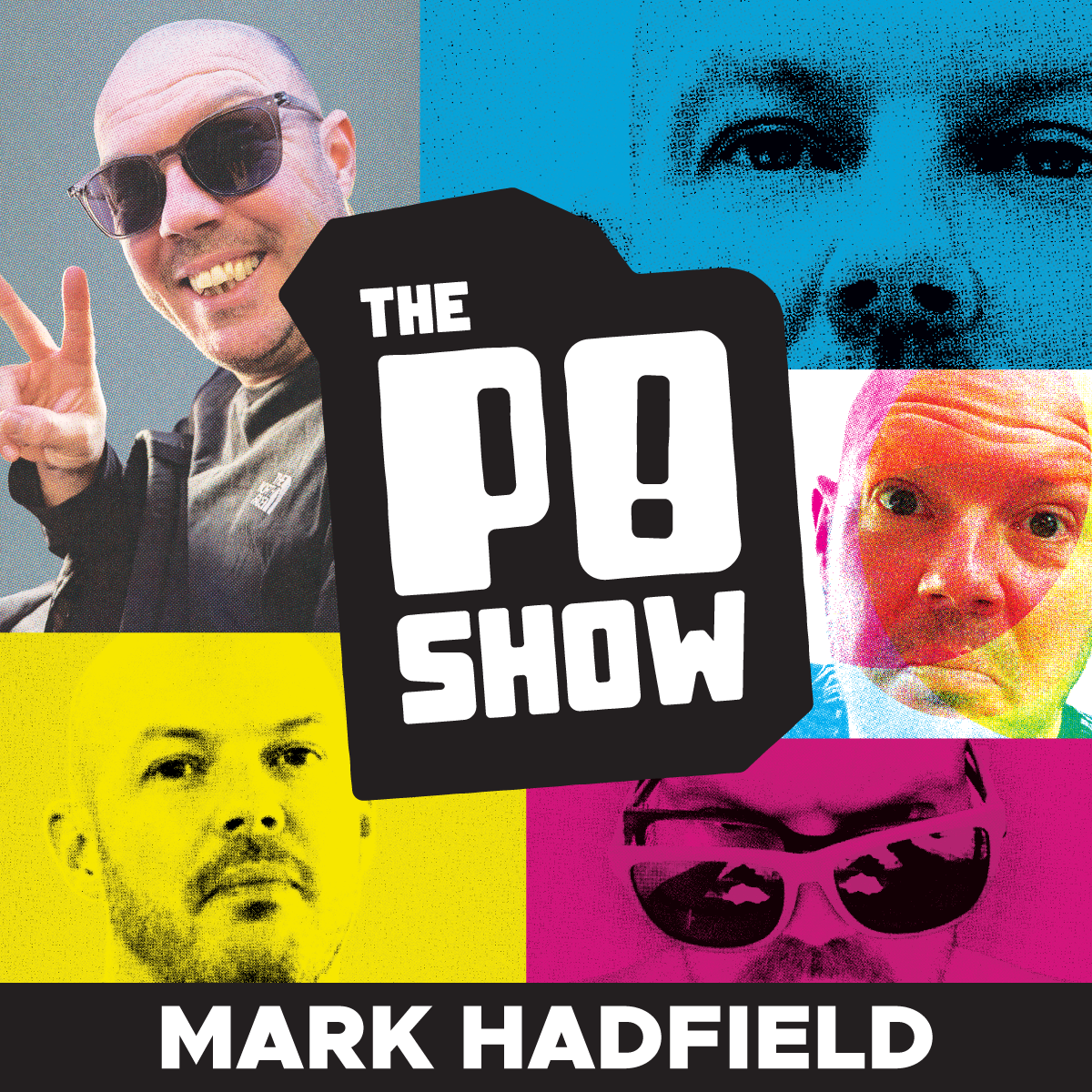
Episode #4 · September 23, 2026You Can't Feel Data
Mark Hadfield's proof that the truth about a brand's customers lives in their kitchen, not their spreadsheet, and the fridge won't lie, even when the person does.
Mark spent 25 years in agency planning before he walked away to go sit in living rooms across Britain and watch what people actually do, not what they say they do in a focus group, and his conversation is a gut-punch for anyone who's traded real people for a dashboard.
You can't feel data. Unless that data is time spent with real people. No matter what part of the planet you live and work on.
Worth a look
Some of the goodies mentioned, just one click away.Rob’s Work
Meet the 85% Audio Project (Also available on Spotify)
APG workshop on ethnographic research (Observing & Engaging, Capturing Reality, Finding the Story)
Books & References Mentioned in the Episode
Positioning, Al Ries & Jack Trout
Hello, My Name Is Awesome, Alexandra Watkins
How Brands Grow, Byron Sharp
Eat Your Greens, Wiemer Snijders
A Technique for Producing Ideas, James Webb Young
2 Ways to Listen, Wherever You Already Hit Play
The Brand BuilderFrom a working-class kid getting his accent mocked in London agency land, to running planning across Asia, to quitting a secure strategy job a week before his second child was born, Mark's path to Meet the 85% is a long argument for trying to understand real people and trusting your gut. This one's the full story.
The PO NotesThe fridge that blew up a plastic-free claim, the closed door before a pension question, and Mark's honest take on synthetic personas. If you've only got fifteen minutes, start here.
Show Transcript
Intro Phillip Oakley: Today's guest makes a bit of a habit of sitting in the living rooms of real people, discussing the economy while mums make breakfast for their kiddos just before time to leave for school, and helping anyone in marketing who will just slow down … step off the speed of culture for a second … long enough to realize they not only misunderstand what an insight is, but at the core of the industry, have a reality problem. He spent early swaths of his 25-year marketing experience as a planner in the UK and Asia, and was the Regional Head of Planning for APAC at Iris Worldwide, managing teams across Asia for Samsung, Guinness, Philips, and Shell. A personal photography project that began in 2021 grew his passion for stories of REAL people who lived outside the major metro markets and were overlooked in culture, governance, and, of course, marketing. In 2023 that project was properly relaunched as Meet the 85%, traveling the UK, engaging with ‘mass mainstream’ families through in-home ethnography, capturing real people’s lives through photography, audio, and documentary-style video, working with agencies and directly with brands. More recently, he launched an online service that provides “Human Reality on Tap,” as co-founder of Dose of Reality. Using Meet the 85%’s years of experience and video recordings, and an AI co-pilot, they’ve bottled up thousands of hours of real human messiness so brands can finally stop guessing what people actually do when nobody’s watching. It’s like Netflix, but instead of true crime, it’s just … true. His core thesis: marketing has drifted away from real people. Agencies and brands have built entire processes that avoid meeting the people their brands exist to serve, replacing real understanding with dashboards and synthetic AI personas. Data tells you what happened, not why. And it’s often what people don’t say that unlocks the creative leap. When he’s not traveling the UK to have real conversations with real people and provide brands with “Reality Advantage,” he’s at home with kiddos and entrepreneurial wife (who happens to be his partner at Meet the 85%), enjoying a Newcastle football match (that’s soccer for my American listeners), enjoying his favorite double-carb meals and offering services as a part-time disco ball. Mark Hadfield, welcome to The PO Show.
Mark Hadfield: Thank you for inviting me, Philip. Wow, whoever you’ve just described there sounds really impressive.
Phillip Oakley: That’s good. You are impressive, my friend.
The Appetizers Phillip Oakley: Part of the insights you provide for brands is a Substack and your podcast titled Meet the 85% Audio Project, where you share audio interviews from some of your projects. If you could sit down with someone you’d love to play some of those clips for — make them pay attention and discuss the meaning behind what those people are saying — who would that be?
Mark Hadfield: Yeah, good question. I’m going to take a liberty and say two different people, if that’s okay — because I’m an ex-planner, I never really answer questions, I just pontificate. The first would be politicians. And I’m not going to be partisan about it — I think politicians of any persuasion need to speak to real people more. I think they fall into the trap of looking at numbers, data, and polling a lot, and you’ve only got to look at various polls here in the UK over the past few years to see how often they get it wrong. When I chat to my clients, they tend to work with lots of data, and we’re trying to get them to work with a handful of real people. Politicians here often do exactly that in a sentence — they’ll share a statistic, “63% of people said life is getting harder,” and then a human anecdote, “and I was chatting to Mary in my constituency recently” — because both need to work together. So the first would be politicians, because politicians need a dose of reality. They need to chat to real people more. The second audience is a little more provocative — it’s anyone in marketing who doesn’t think they need to listen to a handful of real people, of which there are many, because they believe they’ve got all the answers in AI, big data, and the client’s data. There’s no doubt that stuff is essential to the growth of their clients. But there are a lot of brands, businesses, and agencies willing to do away with real humanity for speed and cost reasons, and I think they’re going to fall foul of it at some point.
Phillip Oakley: A little more about you, Mark — if you were a 90s or early aughts band, who would you be?
Mark Hadfield: I was thinking about this when you sent it over — it’s interesting. My mind immediately jumped to Oasis, because I’m from a northern town and working class, and I was really into Oasis in the 90s — showing my age a little. But then I thought, that’s a bit cliché, and B, I’m not that cool, right. I know I was never that cool. Even when I was younger and had hair, and it was bad hair, I was never that cool. So there’s a band from York in the north of England called Shed Seven. And they were notoriously a bit uncool for the music press — people used to take the mick out of them. They had maybe two or three semi-successful albums, one of which was my all-time favorite. But they were actually really quite good musically, and they’re still around now. So I think I’d be Shed Seven, for the simple reason that the music was good, they had a mission and a reason to exist, but they were always a little bit uncool. And that’s probably how I think of myself — I’ve never been cool, but I’ve always tried to deliver something of value.
Phillip Oakley: I love it. That’s perfect. All right, we’ll check them out — and I’ll ask you your favorite song later so I can put it in the show notes and people can listen in.
Phillip Oakley: So what are three of your favorite brands? Do you recall when you first heard about them, and when’s the last time you bought them?
Mark Hadfield: A couple of these were really quick for me. The first is a brand called Alp Kit — A-L-P-K-I-T. They’re an outdoor camping brand, and I heard about them a few years ago when we moved to where we live now, on the outskirts of Newcastle upon Tyne in the northeast of England, which is quite rural. It was an intentional move after living in Singapore for five and a half years — I wanted to get back to British nature. I missed the British countryside out there, as much as I loved the Singaporean countryside and the jungles of Thailand and Vietnam. So when we moved back, on my shopping list was some premium active outdoor wear. I started Googling it, almost from ground zero, and Alp Kit came up. They’re a really interesting business because they’re founder-led and have a membership scheme — you essentially get money back, get credits, the more you shop with them. If you give them reviews, with or without photographs, you get credit back too. So they’re trying to create this circular loyalty economy where the more you buy, the more you get back. And the products are good — good-value outdoor clothing, camping products. I’ve bought a bike from them, a tent, various bits of clothing. As well as selling good products, they’ve got physical stores, which I like, because the physical experience is really good — the staff are great. They also produce a magazine, which is branded content but really beautiful and enjoyable to read. And they run events too. Really nice, really good brand — Alp Kit. The second is more of a professional one — Fuji. I switched all my camera gear for the business from Canon to Fuji a couple of years back, because a friend suggested it and I used his camera and thought it felt much more intuitive, more professional — the kit itself is much better built than what I was using before. I’ve got the X-H2S, I think that’s the right way to say it — a camera where you can get really good film quality, but also really good photographs. It’s built with a customizable dial, so when I’m filming people I can flick one switch to go from filming them in 4K, 50 frames per second, to taking photographs of them. It just means you don’t have to put one bit of kit down and pick up another. So — Fuji. And the last one is a bit of a planning answer, because I’m not going to name a brand — I’m going to name a kind of brand. I was chatting to someone earlier and we stumbled on the subject of brand purpose, this oft-discussed thing, and this person talked about “brand benevolence,” which I thought was interesting. It made me think about brands that commit — that commit to people, society, culture. One example is an existing one, Tesco, the UK supermarket, which has a kind of mission — “every little helps” — and it’s not just in their advertising, it runs through the business, from operational staff to what they do in local areas. Look, they’re a huge organization, they make a lot of money, I’m sure they’re not holier than thou, but there’s a definite sense that they’re committing to something, which I think is really good. The example I’d use from the past — slightly different now that Mondelez have taken them over, but I think it’s still a very good brand — is Cadbury. If you look at the history of Cadbury, founded by Mr. Cadbury, he literally built a town — Bournville, for his workers. He was very progressive when it came to healthcare and training. I think Cadbury is an amazing brand and an amazing product, and I think we’re getting to the stage now in Britain especially, where politics is so broken and society is struggling — I wouldn’t say society is broken, but I think politics is — where the biggest and best brands will be the ones that can actually commit to society by building infrastructure, investing in people, going beyond just communications to convince people to buy their product. So — brands that commit — I think that’ll be one of my favorite brands.
Phillip Oakley: I love that. We don’t have a lot of time to break open the purpose thing, and it’s obviously been quite a buzzword for a while now — maybe ten years, but the last five have been a little over the top. When it’s done right, and it can be done right, it has to actually cost the company something. That’s the line to cross for me. I actually don’t know the story about Cadbury building a town, so I’ll go look that up.
Mark Hadfield: Yeah.
Phillip Oakley: But if you’re doing things that don’t just show up as a line item in a financial meeting — you’re doing it because it’s the right thing to do — for me, that’s when a brand is actually getting it.
Mark Hadfield: Exactly. It’s when they could — an example I used recently is that in the small town where I live, the local playground where children play has fallen to bits. It’s in a real state of disrepair, because the local council doesn’t have enough money to fix it, it’s got other priorities, which I kind of understand. So why wouldn’t a UK holiday brand redevelop that playground, put a big plaque there saying Park Dean Resorts did this, or Haven Holidays did this, and if you like this kind of playground, come to our parks? That’s a brand committing — giving something to a community, and advertising its words, its actions, not ads — which somebody used to say a lot when I was a planner many years back. Advertising and communications, to me, was always the promise of something. Brands actually need to deliver on that promise. So I genuinely feel, in British society at the moment, there is a real role for big businesses to commit to society and add something positive.
Phillip Oakley: I just love that — and that’s something this show is about, building brands, right. It’s not something that’s going to have immediate ROI. Someone in the finance meeting is going to hate it, it’s not going to show up the right way on the P&L, but five, ten years from now — maybe a year or two from now — people are going to remember it, love it, and have an affinity for what was done for them through that action.
Mark Hadfield: Yes.
The Meat Origin Story
Phillip Oakley: Well, let’s get into the meat of the story — your origin story. You spent many years of your career as an agency planner across the UK and Asia before starting Meet the 85%. What was the moment you realized the industry had a reality problem?
Mark Hadfield: That’s a really good question. It was always lingering. I’m from the northeast of England, working-class background, moved to London to study, fell into advertising, and it took me a long while to find my feet — very unconfident, went to a bad school, my accent kind of jumped out, people used to take the piss out of it a lot in agency land. It took me a long time to find the confidence to just be me. So there was this sense that the industry wasn’t representative of the lifestyle I was from, certainly. But then there were a couple of points when I lived out in Singapore, managing teams across Asia and working on a few clients myself. There are two notable stories I share with clients. One was when I worked on Shell — we had a big piece of work for Shell Advance, a motorcycle lubricant. Not the sexiest of categories, but I really enjoyed working on that account, because there are literally billions of motorcycles in Asia, and those motorcycles put food on the table for families all across Asia. The client basically said, we’re going to keep dealing with this product unless you can help us grow — and I loved that kind of question. It wasn’t “what should we put in our ad,” it was “how can you help our business objective be achieved.” We were a non-roster agency at Iris at the time — they had a roster that included JWT and a couple of others, and a couple of those agencies came back and said, you need a big advertising campaign, it’s going to cost tens of millions of dollars across Asia. We actually went out across Vietnam and Indonesia and spent time with workshop mechanics. We said, this has got nothing to do with consumer pull — the category isn’t driven by consumer pull, it’s driven by what brands the workshops stock and what they push onto the end user. So we spent time in Vietnam and Indonesia chatting to the people who push this product onto end users, and experiencing their working reality. I went out there with my camera, took a couple of my planners with me, and a translator, and spent time in the spaces where these people were actually working. It blew the brief wide open. We won the pitch, and it’s work I’m really proud of. That was the first proof of the power of just chatting to a few people. The second was when I was a planner working on Chang beer, the Thai beer. I used to go to Bangkok quite a lot — an amazing account to work on. The clients would take us to all the trendiest bars after meetings, which was amazing too. But there came a point where I said to the client, I want to go where you’re actually losing volume, not just where the cool kids are. So on the next trip we went to where the factory workers hang out, on the outskirts of Bangkok, where the tourists don’t go. That was an eye-opener — a totally different environment. I could see the drinking cultures of the locals and the brands they were drinking, and via an interpreter, understand why they were drinking one brand over another. And I found that more insightful than any cool trendy deck or PDF that hit my inbox. So when we came back to England, I basically said I felt like a bit of an outsider in my own country, and I wanted to try to understand British culture a bit more. I worked with a creative agency for a short while, but essentially I had this burning desire to understand real people, real culture. Three things came together: my passion for photography, my passion for documentary filmmaking, and my passion for reality, for real people. I took the plunge — my wife was a week away from giving birth to our second child when I told her I was going to resign from my secure strategy job and set up a business, because I had a gut feel it was going to be interesting. I haven’t looked back. It’s not without its challenges, but I genuinely, truly love what I do, and I don’t think I’ve ever really been able to say that before, certainly not for a long period of time.
Phillip Oakley: Man, I love it — those are such great stories. Can you share any of the insights from the Chang project?
Mark Hadfield: Enough for the Shell one I can, but I’ll leave the Chang one there for now.
Phillip Oakley: Great, we’ll head off — so tell us, what’s the story behind the name Meet the 85%?
Mark Hadfield: So in the UK we’re quite a divided country politically at the moment, but historically we’ve always been imbalanced economically, population-wise, and in terms of where media and communications are focused. To most people who visit the UK, London might be their first point of call, then maybe Edinburgh, and then some secondary and tertiary places. London dominates this country — our politics is based there, vast swathes of our media is based there. I found this statistic — partly from my own digging, and partly something Martin Weigel, who was then at Wieden+Kennedy in Amsterdam, shared — that 85% of the UK population lives outside of London. London only accounts for about 15% of the population, yet at the time I set the business up, about 85% of communications agencies were based inside London. It’s this huge contrast between where agencies are based and where the people of Britain actually live. The population of the UK is about 69 million people, which means there are vast numbers of people working in the communications industry who don’t spend any serious time with people outside of London. That’s not to say normal people don’t live in London — of course they do, London has a huge range of people, some of the worst poverty in the country too — but it’s only 15% of the population, and the environment of London is very different to the rest of the UK when it comes to transport, commuting, shopping habits. So I set the business up with that name as a provocation — to say, actually, I think you might be being a bit lazy here. It’s not very often you actually get in the car or on the train and go somewhere different. When clients do, they might go to a viewing facility in Manchester or Birmingham, but it’s very rare that a client will hop in the car and go chat to participants in a coastal community or a rural area. So the name was very much a provocation to get out there and speak to as many real people around the country as possible.
Phillip Oakley: I love it. This isn’t just something American listeners can relate to as “not the UK” — not talking about either party, but there’s a whole group of people asking why California is making decisions for the entire nation, why New York is, why Miami should look like the future of commerce, while so much is coming out of DC that’s steering thought. There’s a ton of people who feel disenfranchised because nobody’s talking to them, showing them on television, or listening to them speak. We’ve even worked with large technology companies who only focused on New York, Chicago, or Miami, and I remember raising my hand in a meeting saying, have you actually been to any cities in North Carolina, my state — even Charlotte or Raleigh are decent-sized markets, just much smaller than those major metros. And they didn’t care. To be really direct, they were polite about it, but they didn’t care. And I thought, well, someone’s going to figure out this won’t work in a huge part of the nation, it’s only going to work in those major metros — and that’s kind of sad, because we’re leaving so many people behind. On top of that, the budgets being spent could reach more people who could have more affinity for the brand if they actually spoke to those people and understood their lives.
Mark Hadfield: Absolutely. I used to get the ultimate question when I was out in Asia — an email from our London HQ saying, we’re working on this global campaign, will this idea work in Asia? And I’d think, Asia is quite a big place, it’s quite diverse. The UK is much smaller than the USA, but it’s still quite diverse — and by diverse, I don’t just mean ethnicity, I mean accents, beliefs, behaviors, local culture, not just British culture — and brands often just ignore it. We worked with WPP Media a year or so ago on a really interesting study about local community, Britishness, a sense of place, a sense of home, and it pulled out exactly that — brands don’t go to the lengths they should to really try and hold a mirror up to people outside of a standard British or London accent. Very few go to those lengths, and it doesn’t require a lot of effort really, when you’re talking about multi-million-dollar or multi-million-pound brands. So I think brands hamstring themselves by just being a bit lazy sometimes.
The Work Phillip Oakley: Absolutely. So we’ve talked about talking to customers — and that’s something anyone who’s engaged with me professionally, on LinkedIn, or otherwise has heard me say. I love it — talk to people, talk to real people, especially your customers. But what you’re doing at Meet the 85% is such a higher level than that — it’s proper ethnography. I’d love for you to share a bit about that, so not only trained marketers who understand the word can hear it from you, but also people who haven’t studied marketing but have found themselves doing one of the four million things marketers end up doing. Can you talk about that, and the importance of doing it properly?
Mark Hadfield: Yeah, I can talk about doing it my way — I’m not a trained ethnographer, I’m not a trend marketer per se. My first degree was in architecture, and I gained a master’s in applied imagination, which is basically entrepreneurial thinking. So a lot of what I’ve learned is via osmosis, being self-taught. For me, it’s no more complicated than trying to understand people’s lived experiences. We talk about reality first, brand second — which some of my clients don’t like, because traditional market research for a brand is really quite prescriptive. A focus group that’s two hours long has a minute-by-minute discussion guide — minutes one to four, introductions, minutes five to seven, set the scene, minutes eight to nine, invite them to eat the sandwiches, and then it’s straight into, what kind of car do you drive. People don’t think like that. They don’t wake up thinking about brands or categories, they don’t know what a category is. So when we go and visit people, we have a discussion guide, which is proprietary, and it’s not linear — it’s very organic. We have three or four centers of gravity in our conversation, and they invariably don’t mention the brand a lot. Our participants don’t even know which brand we’re there to talk about. Of course we want to sway the conversation there if it happens naturally, so sometimes we’ll tell a client, we’re going to go visit somebody for two, three, four hours, but we’re not going to go in and ask about your brand — maybe at the end, we might probe before we leave. And clients get really uncomfortable about that, and I get it, because they want to make sure they’re paying for something of value. My provocative answer, a lot of the time, is — if we give them multiple opportunities to mention your brand, because we’re talking about something relevant, like the cost of living, or nutrition for a food brand, or high fat, sugar, salt communications — and they don’t mention your brand in three or four hours, there’s your first learning. They don’t care about you. If we do have to force the brand on them and get their views towards the end of a session or a project, that’s when we do it. So that reality-first, brand-second approach gives us a glimpse into the life of the participant, not the life of the brand. That’s the first thing we do — make it as natural as possible, brand-blind. The participants don’t know they’re on a project about a particular brand. The second thing we do is the context really matters — where we visit people. We try to meet people in relevant times and situations. We just worked with EE, the mobile and broadband brand in the UK, for a year — we had homes all across the UK we’d physically visit several times a year, plus remote virtual diaries. That gave us two things. First, weekly doses of reality that landed on the client’s desk Friday morning — took ten minutes to dig into: this is what’s going on in the lives of your customers this week. Sometimes it was about something relevant, like the TV show Adolescence, which was very big here. Sometimes it had nothing to do with the brand — what are they doing this Halloween, or this Bonfire Night. Second, we physically visited homes of different sizes and shapes — student households, retired households, households with young children, households with teenagers — at relevant times, so when the iPad was taken away, when the students were gaming, and we gathered content that was as much about observation as about the interview itself. So: reality first, brand second, and making sure we visit people in the right context at the right time — that’s how we do it. Then it’s a blend of ethnography, documentary filmmaking, and journalism. A lot of how we chat to people is a little like Louis Theroux — trying to be at one with the participant as much as possible while you’re there. That can be tough sometimes, because you meet people who have views you really don’t agree with, or something outside your comfort zone, outside your own personal experience. So it’s very much about going, learning, soaking up, and ultimately trying to understand the lived experience of the people you meet.
Phillip Oakley: Excellent. So give an example of something you can learn about people by sitting in their kitchen that you can’t learn from a survey or a focus group.
Mark Hadfield: So, one participant jumps to mind immediately — a project around sustainability for an energy brand. We recruited people through a screener, and like I said, we always put red herring questions in there so they don’t know it’s about energy — what car do you drive, who do you bank with, who do you get your energy from, do you have a smart meter, and then various other things linked to energy, talk to me about your car and fuel. Anyway, the conversation got round to energy, because that’s how we massage it for a natural flow — like a normal human conversation. I spent ages talking to this particular participant about all the measures she’d gone to, to be more sustainable — her daughter was putting pressure on her, so she doesn’t buy plastic anymore, she does this, she doesn’t do that. Brilliant. About a half-hour conversation. Then towards the end I said, okay, let’s go for a walk around the house, I’m interested in your environment. And everything she’d claimed during the conversation — we went and opened the fridge, and it was full of plastic. We went into the room and the trash bin was full, the recycling bin was empty. So what people claim and how they behave can sometimes be two very different things. If you’re filling in a survey, there’s loads of evidence about how surveys are flawed and people are incentivized to answer a certain way. But even in a focus group, this participant would have claimed all of those things, and they would have been taken as fact. When you observe the lived reality of that person, their actual behaviors were totally different to what they were claiming.
Phillip Oakley: Yeah, absolutely, that’s fantastic. The other thing is you don’t get the nonverbals, the way people react to those questions. One of my favorite quotes of yours is “you can’t feel data.” So how do you convince a data-obsessed CMO that the photo of someone’s fridge matters as much as a dashboard?
Mark Hadfield: It depends on their objectives. The honest answer, Philip, is it might not be for the brief they’ve set. If they’ve set a brief that says, we want statistically robust evidence that A is better than B, they’re probably going to need big data — asking five people isn’t statistically robust evidence. What we do gives you hypotheses, provocations, opportunities you can then further investigate. There’s a really important point in what you just said about observed behaviors. I was chatting to somebody earlier about household finances — notoriously difficult to track, because people don’t want to share that information, particularly in Britain, where we’re very closed about our finances, very traditional about not talking about how much money we earn. Ask people in a survey and they might tell you an answer, might get some kind of banding. I was chatting to a participant last year, and this really stuck with me — we’re talking about household finances, it was him and his partner, and his adult children were upstairs, back from university for half term. We’re talking finances, and I asked one question about his pension, what age he could retire. He got up, walked to the other side of the room, and closed the door — because he didn’t want his kids to hear what he was going to say. So you know there’s something coming at that point, something special about what he’s about to say, because that’s a piece of behavior you observe before an answer. So that’s a little example of how what people say and what people do can be quite different, but also the little actions they make can be really powerful, and sometimes you can miss them. There’s another example, from the EE project — I was chatting to some parents with young children, about gaming, in the holistic sense, physical board games and electronic games. I asked the parents what kind of electronic games their kids play, and the mum was whispering, because the kids were just over there and she didn’t want them to hear, because she knew if they heard her saying this particular thing, they’d ask for the screens and all the rest of it. So she was whispering. Then I asked about board games, and her body language totally changed — she was speaking openly, excited. So there’s something there about the stress and pressure a subject brings her in front of the children, versus something she’s trying to promote. Body language, verbal cues, nonverbal cues can be really important in surfacing hypotheses and provocations.
The Teaching Phillip Oakley: Yeah, absolutely. Bear with me a second, because we’re running out of time and I’m going to skip over some of my questions, but I want to make sure I get to some of the good stuff. Thank you, by the way — love the conversation, wish we had more time. So — you have an APG workshop that gets into the process, and people can go find that, we’ll make sure it’s in the show notes so they can find your workshop. But you break the process down, as you mentioned earlier, into observing and engaging, capturing reality, and finding the story. Which of those three do you think is hardest to teach someone who’s never done it before?
Mark Hadfield: That’s a really good question. Probably the first or the last one. Observing and engaging, really, for planners and strategists especially — which is who the APG workshop is aimed at — is hard. I found it hard myself, simply because as a planner, as a strategist, I’ve been programmed to speak in meetings, try to be the smartest person, have the smartest question, make the sale. What you’re essentially trying to do with observing and engaging is keep quiet and just guide someone through their own conversation — try not to overlap with them, try not to create forced conversations, and as much as possible, keep quiet and let them talk. That’s difficult from a strategic point of view. Capturing reality is really about the kit and technique of capturing — documentary filmmaking and photography styles. That’s a subjective, personal thing about what people want, and it could be a bit of a tech-geek thing as well. But finding the story is also tough, because I believe all editing is bias. Ultimately, if you work with a client, say you’ve got ten participants and you visit each for half a day, you end up with 40 hours of conversation. You can cover a lot of ground in 40 hours, go really deep. The debrief — and I don’t like the word debrief, which is why I do that — is invariably 90 minutes, and within that 90 minutes with a client you’ve probably got the ability for 15 or 20 minutes of film. So you’ve got 38 hours and 40 minutes of stuff left on the cutting room floor, and you’ve got to select which 20 minutes are a natural and honest representation of what happened during your time with your participants. I find that quite a burden sometimes. It’s easy, and I remember this from my old planning days, to find a piece of evidence to prove the point you want to prove — we can all do that. But trying to accurately represent what happened in 40 hours in a 20-minute slot is really quite burdensome. That can be difficult too.
Phillip Oakley: That’s great — again, not to take up too much time, but this is exactly why I wanted to produce the show this way. We have a short version people can digest in ten minutes, but this lets everyone hear everything about you, and the way you say it and describe it — because all of that is very, very important.
Phillip Oakley: So — in the workshop, one attendee said your session made them re-evaluate the meaning of an insight. That’s something that sparks debates on LinkedIn all the time — what do you feel most marketers get wrong about what an insight actually is?
Mark Hadfield: I have so many opinions on this, being an ex-planner, a reformed one. One version of an insight I used to like — I used to debate this a lot with friends in the pub in London — is that it’s like opening the fridge and the light coming on. It’s a new way of seeing something you’ve seen lots of times before. I think that’s what I like about an insight. I think observations and insights get confused quite a lot in the communications industry — everything is called an insight. In the world I’m in now, more of a research world, you get heads of insight, you get insight clients. I think the word has been bastardized quite a lot. I wouldn’t profess that we unearth lots of insights, just because of the way I describe the word. What I will say is I think we unearth human lived realities that our clients and strategists very rarely see — uncomfortable things, potentially quite mundane things, but when you bring them together, they can make people feel something. And ultimately communications, as we’ve been told for many years, is about trying to make people feel something. So if you start with research that doesn’t make you feel something, I think the whole chain of events follows from there. In our debriefs, we often have clients who are crying, or feeling uncomfortable, because of some of the stuff we’re sharing with them — that’s not intentional, that’s just the reality we’re showing, because I think a lot of brands, strategists, clients, agencies want a sanitized view of what’s going on in people’s lives. We don’t deliver that. We deliver the reality of what’s going on in people’s lives.
Provoking an Industry, to Help It Phillip Oakley: That’s fantastic. So again, trying to make the most of our time — there’s so much now, especially with B2B, where it’s hard to get time with executives and decision-makers, and there’s a lot of synthetic — not synthetic interviews, what’s the word I’m looking for — synthetic personas. Where do you draw the line on AI and synthetic personas in research? Is there a legitimate use case? My fear is it’s going to become such a shortcut. What are your thoughts?
Mark Hadfield: Yeah — I’m a bit softer on synthetic personas than my business partner, James, who’s got a whole talk about why he feels they’re really dangerous for the industry. You should chat to him. I’m a little softer, because I remember my time as a planner, being told to go out onto Oxford Street in London and find half a dozen people to sit in a focus group. That’s not research. So I think synthetic personas will probably be better than that. What synthetic personas are not better than is true human interaction — because of all the stuff we’ve talked about. It’s about observing, it’s about context, it’s about the closing of a door before someone talks about their finances. I’ve also got a bit of a plea to strategists. I love the art of advertising and brand strategy, I spent many years doing it. I was chatting to an old colleague of mine, trying to say, look, you need to work with us more, get more human reality — and he said, yeah, but we’ve got these synthetic personas now, and they’re quicker, cheaper, and 90% accurate. That was the headline of what he said. And I said to him, look me in the eye and tell me you got into this industry to be 90% accurate and to do things quicker and cheaper. It’s something the paymasters of agencies want, something brands want because it’s quicker and cheaper — but is it accurate? I don’t know what accurate even means from a human behavior point of view. We’re complex, we’re contradictory. So the first thing is, humans are more nuanced, and they’re not as stereotypical as synthetic personas. The second thing — I actually think there’s an existential piece I’m incredibly passionate about. We live in divided nations, both of us, pretty much split down the middle, and you could argue one of the levers of why we’re divided is a lack of communication. Social media polarizes — that’s an oversimplification, but if you’re a brand developing a new product or service, going to market with it, wanting people to spend their hard-earned money on your product and not a competitor’s, and wanting them to love your brand, because brands love to measure “brand love” — and you’re doing all of that without speaking to a single human being, doing it all with synthetic AI or big data — then I think you are arrogant as hell. I think that shows a level of arrogance on an industrial scale. And if that happens, and the industry dies because of it, then so be it, because brands are showing a lack of respect to real human beings by doing that.
Phillip Oakley: I could not agree more. Again, we’re getting into cheaper, faster — and there’s the other thing I want to talk to you about, the speed of culture, that’s the other thing throwing everything off. I think you and I could have an entire episode about this, but we both share the disdain for “the speed of culture.” Every day we read some agency or service vendor promoting themselves as saying they move at the speed of culture. What does chasing speed actually cost a brand, and what does slowing down to do the real, hard work get you instead?
Mark Hadfield: There are numerous ways to have this conversation. A few things spring to mind — short-term versus long-term, immediately. And my planning brain kicks in: question the question. Why the speed of culture — first, why speed? Second, what does “culture” even mean? I think a lot of people in agencies talk about culture in a way that suits their narrative, but couldn’t tell you the actual definition of it, and that pisses me off a lot, as you know, Philip. Culture is everything. Culture is all around us. Culture is the guy next door you don’t get on with. Culture is the reform voter you disagree with. Culture is the shop over there you never go in. Culture is a football team you hate. Culture is that couple arguing at the bus stop. We never see any of that in “cool” brand culture — it’s always the cool kids, the cool inner-city kids, a very sanitized version of culture. That immediately pisses me off, brands selecting what they think culture is. The second thing is speed — we’ve become obsessed with short-term speed, legitimizing every decision with big data, because there’s a huge amount of fear in the industry. Clients are looking for a big piece of data to say, I made a decision, and if it goes wrong, well, the data told me to. The reality is successful businesses and brands scaled and grew well before big data existed, well before AI existed. So I think some of the fundamental tenets of marketing and business growth have been forgotten in this clamor for speed. My last point on culture — essentially it’s a conduit to try to get your message across to people. Thirty, forty, fifty years ago it was advertising, unapologetically — Rosser Reeves in the US, who invented the USP, would just ram a brand name down people’s throats. Then it was all about engagement, brands wanting to engage with people. Now it’s all about culture — “we don’t do advertising, we do culture.” It’s a conceit to try and deliver a branded message. Just deliver your branded message. Just let people know why you exist. I’ve got numerous issues with the speed of culture, as you can tell.
Questions from Industry Friends Phillip Oakley: Absolutely. So we’re running out of time, and I want to make sure I get to our friends’ questions, if you don’t mind. This is a bit we’re calling Questions from Industry Friends — we go out and try to find someone we both know, give them the lay of the land of what the episode’s about, and see if they can add a challenging question, because we want the audience to understand your approach and engage with you afterward. Before I share this, I want to point out to the audience — you’re a huge Newcastle fan, and I think there’s actually an Alan Shearer figurine right behind you.
Mark Hadfield: Just there. We call him Uncle Alan in this house. Uncle Alan.
Phillip Oakley: Uncle Alan, okay. So the first question is from Lee Woodard: “What can a football terrace tell us about people that nothing else can?”
Mark Hadfield: I think, for me, passion — a few things spring to mind, passion and virality. We talk about passion towards brands and all the rest of it — you want to see true passion, you get 52,000 Geordies in St. James’ Park, male and female, some of whom have had a drink, some of whom haven’t, but when there’s a good pass, a good tackle, a good goal, you cannot bottle that passion. Brands would love to bottle up passion. That’s the first thing. The second is virality — I often wonder, where did the Mexican wave come from? Who was the first person in any crowd to stand up and say, right, you stand up after me, then you stand up after me? And with terrace chants, songs about players — who originates them, how do they take hold? It might be slightly different now, in the days of social media, but you go back to the seventies and eighties — how did those chants exist, how did people learn about them, how did they take hold? So I think passion and virality.
Phillip Oakley: Yeah — college basketball is a big thing here in the States, and at Duke University, a successful NCAA program, they’ll actually pass out sheets about the opposing team to get things going — smart, right, here’s your cheat sheet, kids. But some of the smaller clubs in the UK, they’re not exchanging this in a WhatsApp group — or maybe it does start with a WhatsApp group — weird stuff happens on the pitch, and three hundred to three thousand people start chanting about it as if they’d pre-scripted it ahead of time. It blows me away.
Mark Hadfield: Yeah — I was going to say, the environment of a football stadium, for me — there are probably a few things in each of our lives, right, the world can be stressful, work can be pressurizing. I go to St. James’ Park, see Newcastle play well, and I turn into a child again. I forget about how bad the world is, forget about the pressures of work. That, for me, is the beauty of a passion — whether that’s fishing, walking, reading, listening to music, writing, whatever it is. When I go to St. James’ Park, I’m at one with those people — those multimillionaires I believe I’ve got some kind of association with, who I believe can hear me. There’s something really special about that. That’s what brands are always trying to tap into. But there’s something truly unique about a football or soccer club, because of how it embeds itself in your being, in your DNA.
Phillip Oakley: Yeah, we go crazy. All right, so two more questions — these are from the Jedi Master, my favorite podcast host, Giles Edwards. I’ve got to stop calling him for questions, he’s so good at it, I’m taking advantage of a friend.
Phillip Oakley: So Giles asks — when people want to understand why something is broken, they often say follow the money. So if we follow the money in marketing research and ethnography, why has the industry become so detached from real people? And given the commercial upside of understanding people properly, why do so many brands still treat it like an optional expense?
Mark Hadfield: Yeah — I think the vast majority of brands don’t think they need it. They think they have an accurate view of what’s going on with their customers and prospects. I also think the discourse around big data has given them reassurance — which isn’t a bad thing, but I think, like you said, it’s cut real human beings out of the loop. I also think there’s an infatuation with being able to measure everything — marketing existed a long time before data could measure every click and every piece of behavior online. But there’s an inconvenient truth: it’s very difficult to measure human existence, human reality, people’s behaviors, because we’re very contradictory. There’s a desire, for brand clients and agency clients, to want to simplify everything — who wouldn’t, the world is complicated, we’re polarized, contradictory, complex beings. But the risk of oversimplifying something actually renders it totally meaningless. When every brand has seven segments, and they’re all distinct — I remember doing a bit of work for a pizza brand once, and they had seven personas, seven occasions, one was “the lunchtime slice,” one was “the dinner treat,” and the average buyer was 1.4 slices. I said, you can’t buy 1.4 slices, that’s nonsense. And I said, okay, how often do your audiences have the lunchtime treat, then go on to the dinner one? Oh, it can’t be the same people. What do you mean it can’t be the same people? Well, it’s wrong, isn’t it — clearly some people would do that. So I think brands oversimplify and quantify things to the point where it’s actually just a load of nonsense. But nobody dares put their hand up and say the emperor has no clothes on, because key stakeholders have been involved for months and months getting things signed off. We actually find there’s a bit of resistance to working with us sometimes, because we’ll go into an organization and share provocations that question something statistically robust. We’re not saying the statistically robust thing is wrong, but we’re saying, here are a few examples of what people have actually said — it might be worth having a look at, there might be an interesting angle. People don’t like that. They don’t like having things questioned that have already been signed off by multiple levels of stakeholders.
Closing Question Phillip Oakley: If you could communicate one thing to every marketing channel in every city around the world simultaneously, what would that message be?
Mark Hadfield: Would this message go to human beings, or to the marketing community?
Phillip Oakley: You get to choose.
Mark Hadfield: I’ll share something with the marketing community, because I don’t want to take on the huge responsibility of communicating something to everybody on Earth. Have the confidence to acknowledge that the reality gap exists. We find with our businesses, Meet the 85% and Dose of Reality, that the clients we attract are the ones with the confidence to put their hand up in a meeting and call bullshit — to say, look, the big data is great, the AI is great, but we’re missing something here. Too many people nod along because they don’t want to be the person who puts their hand up — there’s a big culture of fear. So I’d say to everyone in the marketing community: be confident in acknowledging the reality gap, because it does exist. Once you acknowledge that problem, the first step of solving a problem is acknowledging you have one. And I think the best clients, the ones we work with, are the ones who acknowledge they have a reality gap and need to bridge it somehow.
Phillip Oakley: What a fantastic message. A message that could be conflated with this is “be brave” — that’s out there too. You know, be brave, and — we have a friend, Giles, who says, why be brave when you can be right? That’s the point — be confident that you don’t know something, and put in the time, effort, and investment to go figure it out, so you can be right, or closer to being right, as opposed to being brave with something that may not work.
Mark Hadfield: Yeah. I had a moment in my career as a planner — one of those real fundamental moments of change — where I realized everybody’s making it up as they go along. We’ve all got specialisms, we’ve all got strengths and weaknesses, but fundamentally every new day is a new day for all of us. It was a real Damascene moment for me — we’re all making it up as we go along, so just be yourself. Having the confidence to do that was a huge game-changer for me. And I just wish there was more confidence, because fundamentally the “be brave or be right” thing — all I’m saying is speak to some human beings, that’s all I’m saying. Speak to some human beings and add that into your research mix. It’s not a controversial thing. The fact that it’s controversial blows my mind — “speak to some human beings and use that alongside your big data and your AI” — it blows my mind that that’s a big deal for people.
Phillip Oakley: Yeah — and going back to something you said earlier, about what the CMO or CFO is after — if they’re looking for big pieces of data, they don’t want to talk to five people. The five people doesn’t replace big data. Do both. You might actually find the right data, or be able to justify or show that more people feel a certain way, if you’ve actually talked to the people. That’s the part they’re missing.
Mark Hadfield: A hundred percent. And also, on a human level, it makes you feel a bit better — because we live in societies where we don’t talk to each other. So actually saying, I’m going to go talk to half a dozen people, someone in the call center, someone who works in the restaurant I’m advertising for — just go talk to some real people. And honestly, when we work with clients, a lot of the time they say, I used to do this stuff, and it was the best research I ever did, but we don’t do it anymore. It needs to come back — that’s Meet the 85% and Dose of Reality. I’m really confident the products we offer are good products. But for every action there’s an opposite and equal reaction — there are lots of businesses and brands going down the AI synthetic persona route, I’ve got nothing against that, but there are a number of brands, in addition, coming to us saying, we need some true human reality as well.
Sign Off Phillip Oakley: So we did not get to tuck into Dose of Reality the way I wanted to — sorry, folks, we ran out of time. But taking that entire library of people, their emotions, their families, their lives, their questions, their conversations, and putting it in a place where you can use AI to search for the information you’re missing — that sounds amazing. I urge everyone to go learn more about Dose of Reality, we’ll make sure it’s in the show notes. Mark, how can people learn more about you, Meet the 85%, and Dose of Reality?
Mark Hadfield: Meetthe85.com, and DoseofReality — the two are complementary businesses. Meet the 85% is a boutique ethnographic research consultancy, we work project by project for specific clients. Dose of Reality is where you can buy a subscription and tap into true human reality — we’re proactively traveling all over the UK, meeting people, filming people, and then using AI as a strategic sparring partner, so you can go in and find the elements that are right for you. The AI doesn’t create anything synthetic, it just helps you select the bits of human reality that are right for you. You can prompt it like any other AI — show me what people think about this particular brand, how do people feel about the new incoming prime minister, show me themes and trends in how people in the north are different to people in the south — and it will pull clips and photographs relevant to you. Recently launched, and it’s getting bigger and stronger.
Phillip Oakley: I love it. Once it blows up and you take off in the UK, come over here and let’s make it happen for the US too. Mark, thanks for joining The PO Show, we’ll talk soon.
Mark Hadfield: I would love to. Thanks very much, Philip.
Keep It Coming